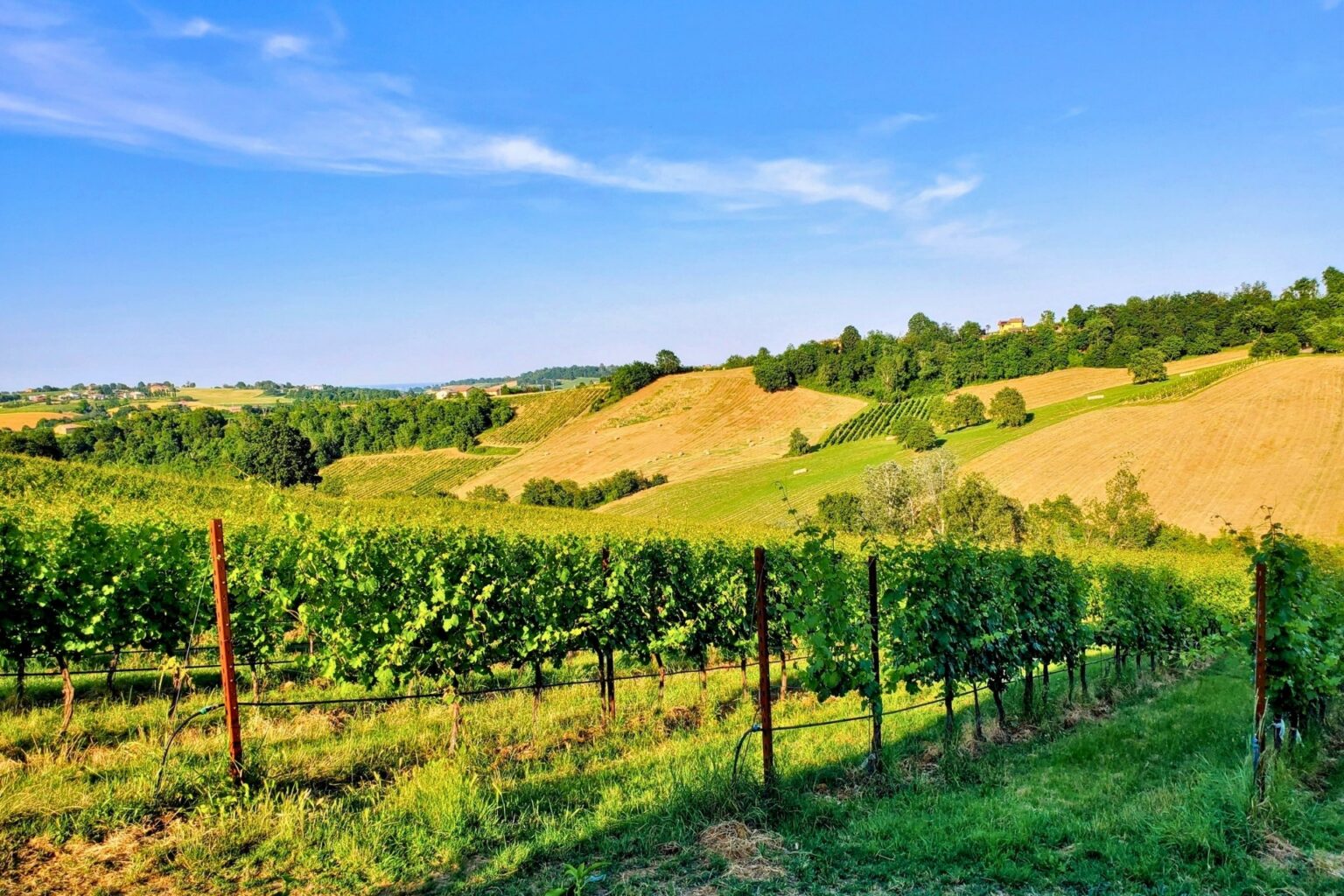
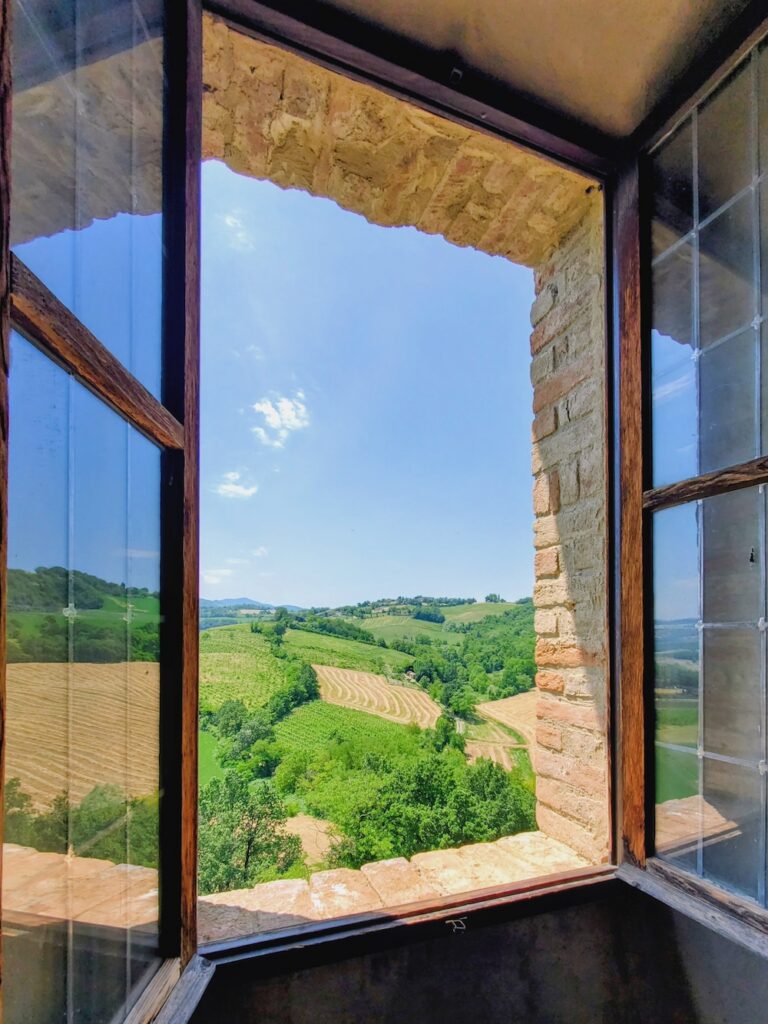
Cradled in the foothills of the Apennine Mountains along Italy’s Po Valley is the country’s leading agricultural region, Emilia-Romagna. From this northern territory’s distinct geography and microclimates, some of Italy’s beloved culinary legacies emerged.
Words & Images by Christopher Ludgate
The ancient road running through this region is known as Via Emilia, stretching through the fertile plains from the city of Piacenza to Rimini on the Adriatic Coast. Two millennia after its creation, Via Emilia still thrives today as a 150-mile culinary corridor affectionately called the breadbasket of Italy.
The deep-rooted traditions, rich flavours, and strict artisanal craftsmanship behind Emilia-Romagna’s countless revered goods cannot truly be replicated anywhere else. The local air, the soil, and the water are in their essence. In fact, the EU’s certification status protects the authenticity of 42 coveted local products.
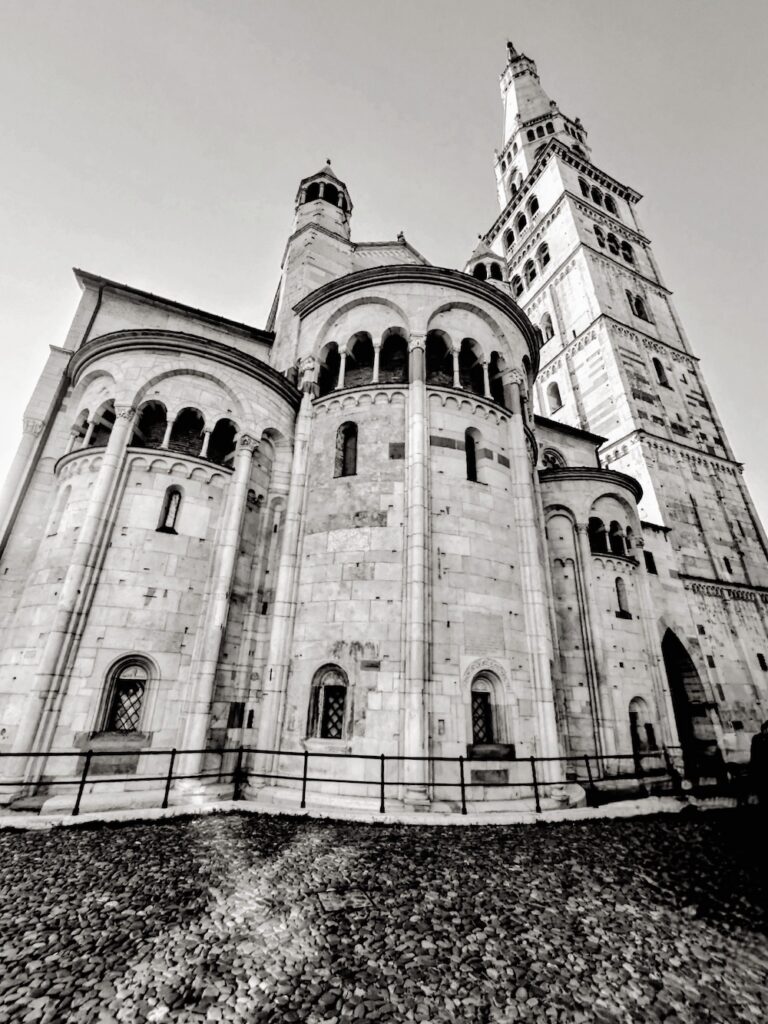
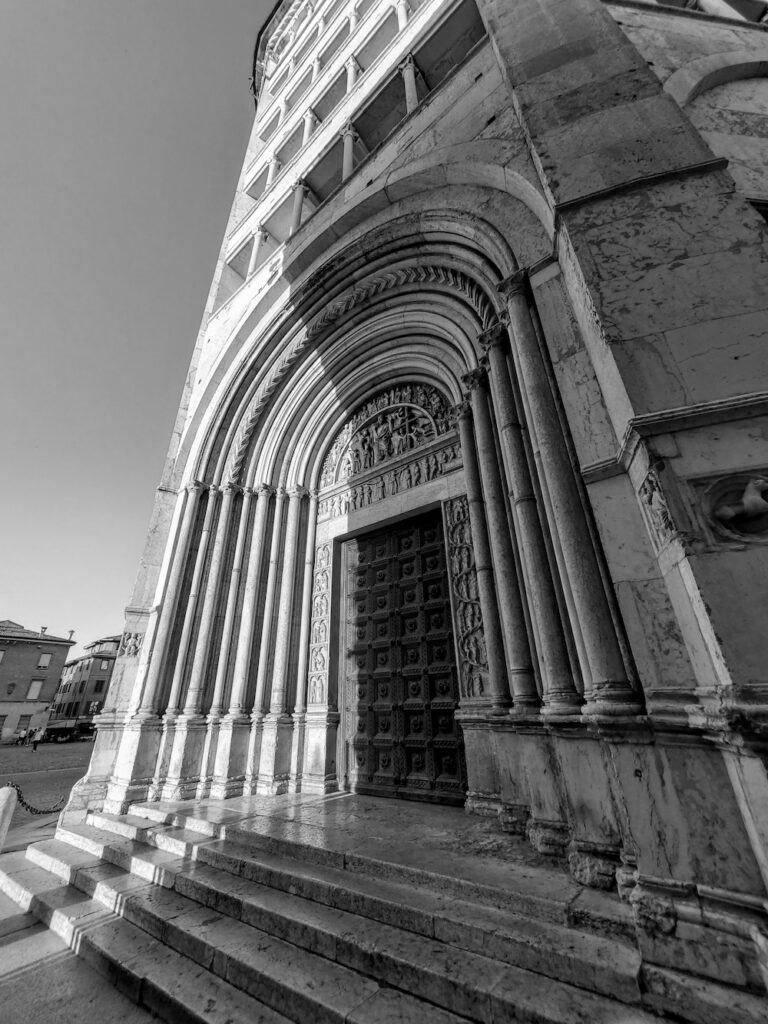
Today, Via Emilia is also known as Strada Statale 9, and it’s the backbone of northern Italy’s agricultural trade, leading to historic treasures like Parma, Modena, and Reggio Emilia.
During a recent Italian adventure, my road ahead unfolded into an immersive cultural and gastronomic journey while en route to Bologna in search of the Path of the Gods.
The Real Lambruscos
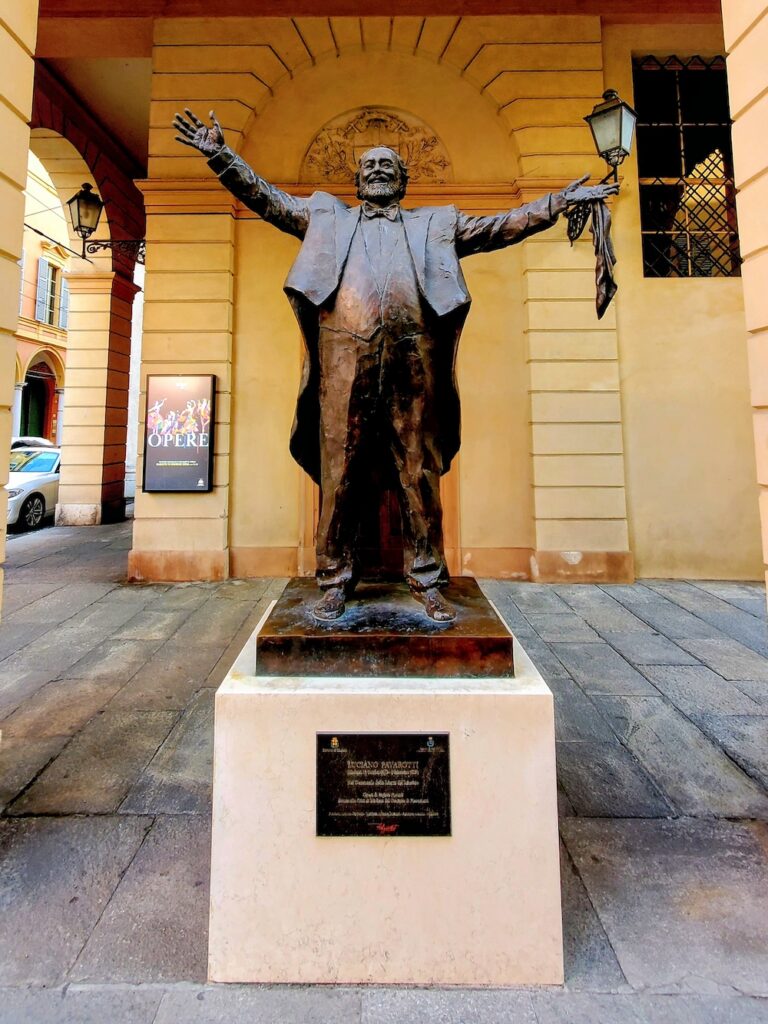
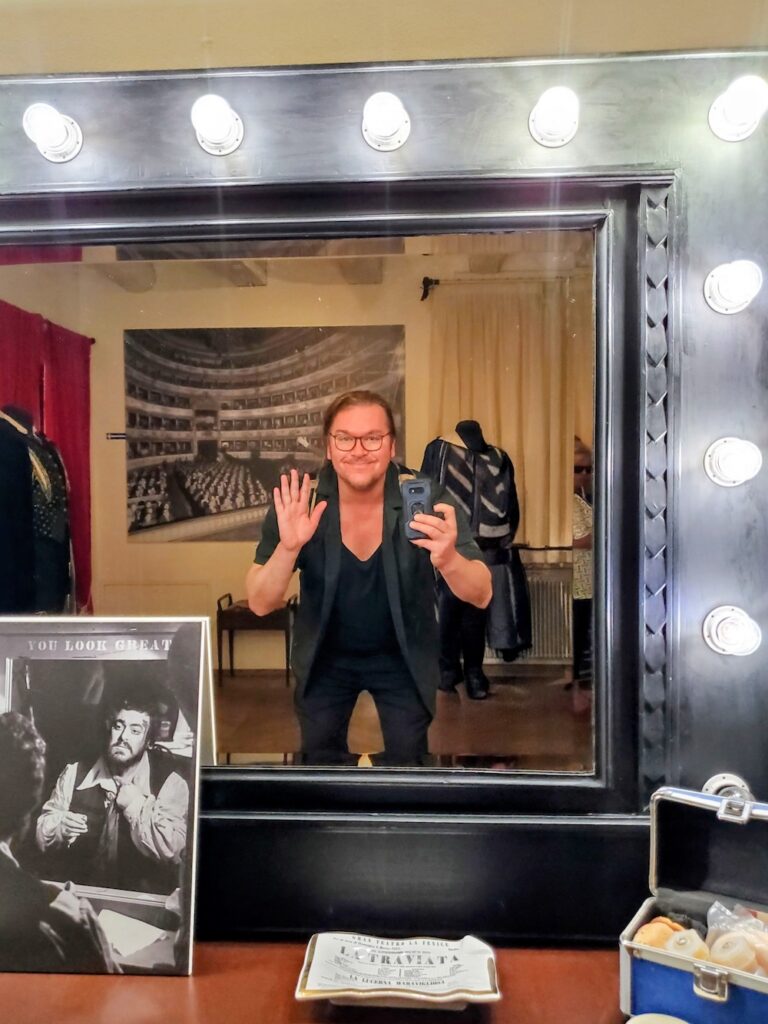
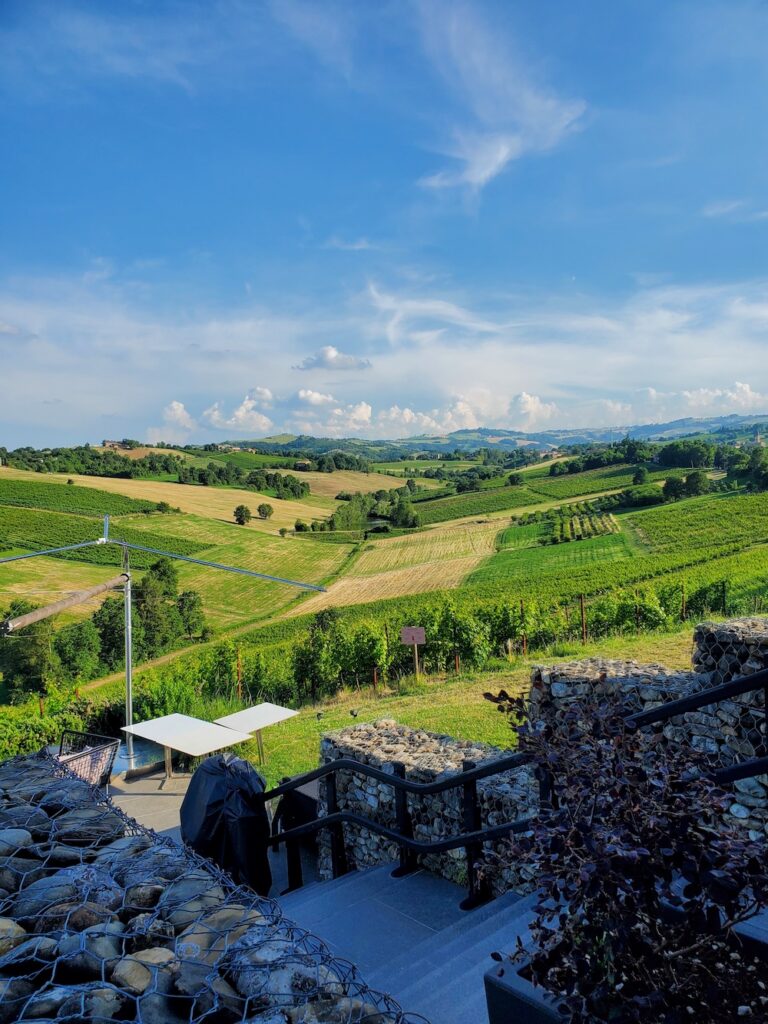
It was nearly golden hour in the rolling hills of the Levizzano Rangone vineyards just outside Modena, and I sat, nestled by the terrace pool at Opera 02 Cà Montanari. I spent the earlier part of the day at nearby Casa Museo Luciano Pavarotti, marvelling at the former estate of the renowned opera singer whom I had the good fortune to meet long ago.
At the vineyards, I wandered the manicured rows of flourishing Grasparossa and Malbo Gentile vines before touring the organic winery and vinegar loft. Corks popped as the modern estate’s Michelin-recognized restaurant welcomed a full house of guests now imbibing the goods.
Decades ago, someone thought it was a good idea to mass-market a cheap take on a vibrant, sparkling Italian wine that has ancient roots in Emilia-Romagna. It’s the infamous Lambrusco, and it may still be in your grandmother’s cabinet. Sure, some people like it. But in truth, its industrialization completely misrepresented the local favourite, stigmatizing it as ‘the Coca-Cola of wines’.
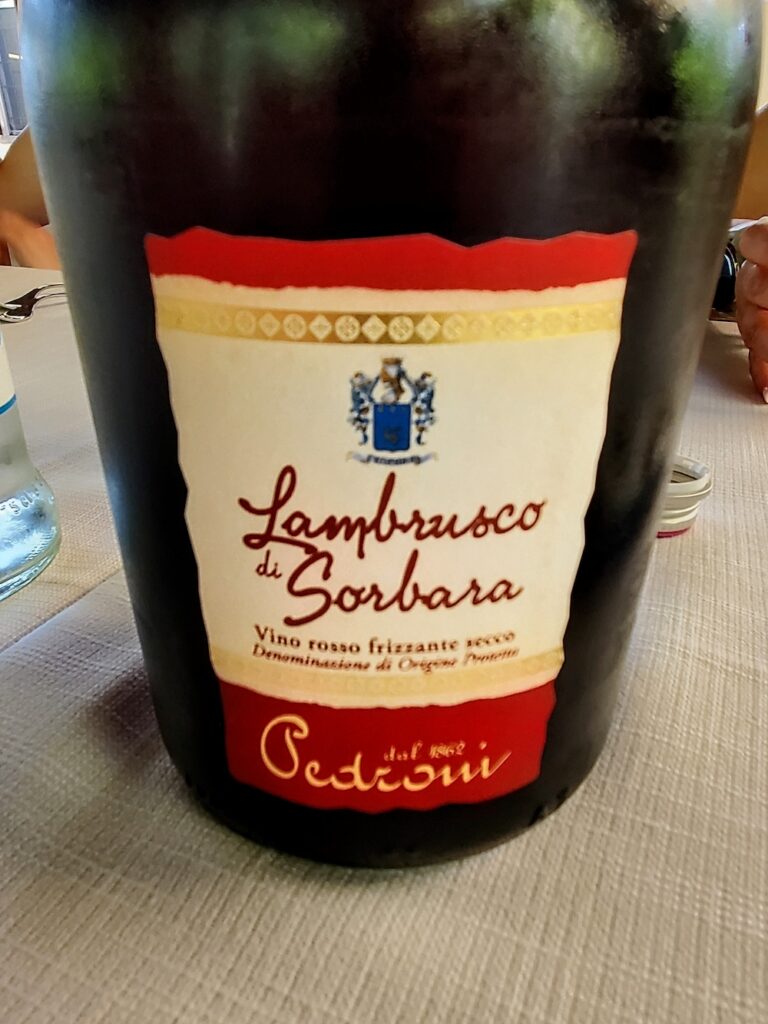
It’s only recently that the real Lambruscos started recovering from the travesty, even earning their way onto the menus of today’s Michelin Star restaurants, like Rezdôra in New York.
The welcoming presentation of the real Lambruscos began at Opera 02, amid the thriving fields of fruit. The experience unfolded with an array of regional seasonal pairings prepared by a very capable kitchen.
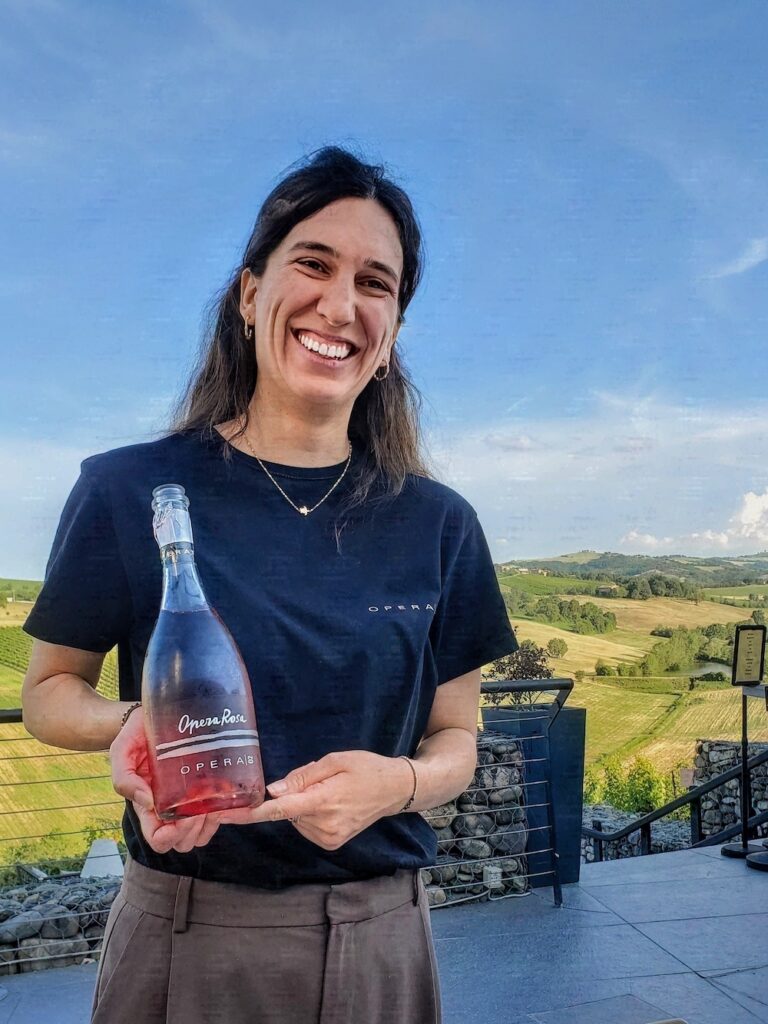
A delightful trio of dynamic organic DOP (Protected Designation of Origin) Lambruscos began with the light, effervescent Opera Rosa, then the old-school Brut, followed by a coveted deep, leathery Malbo D’Opera IGP (Indicazione Geografica Protetta) from the grape of the same name.
I drank in the sweeping views as the gentle sun seemed to set so slowly behind me. I leaned into the seductive flow, enjoying the levity, the friendliest service, and then …good Lord, that risotto …drizzled with just the slightest hint of the vineyard’s thick, sweet, complex balsamic nectar.
Il momento perfetto.
The Religious Experience of Balsamic
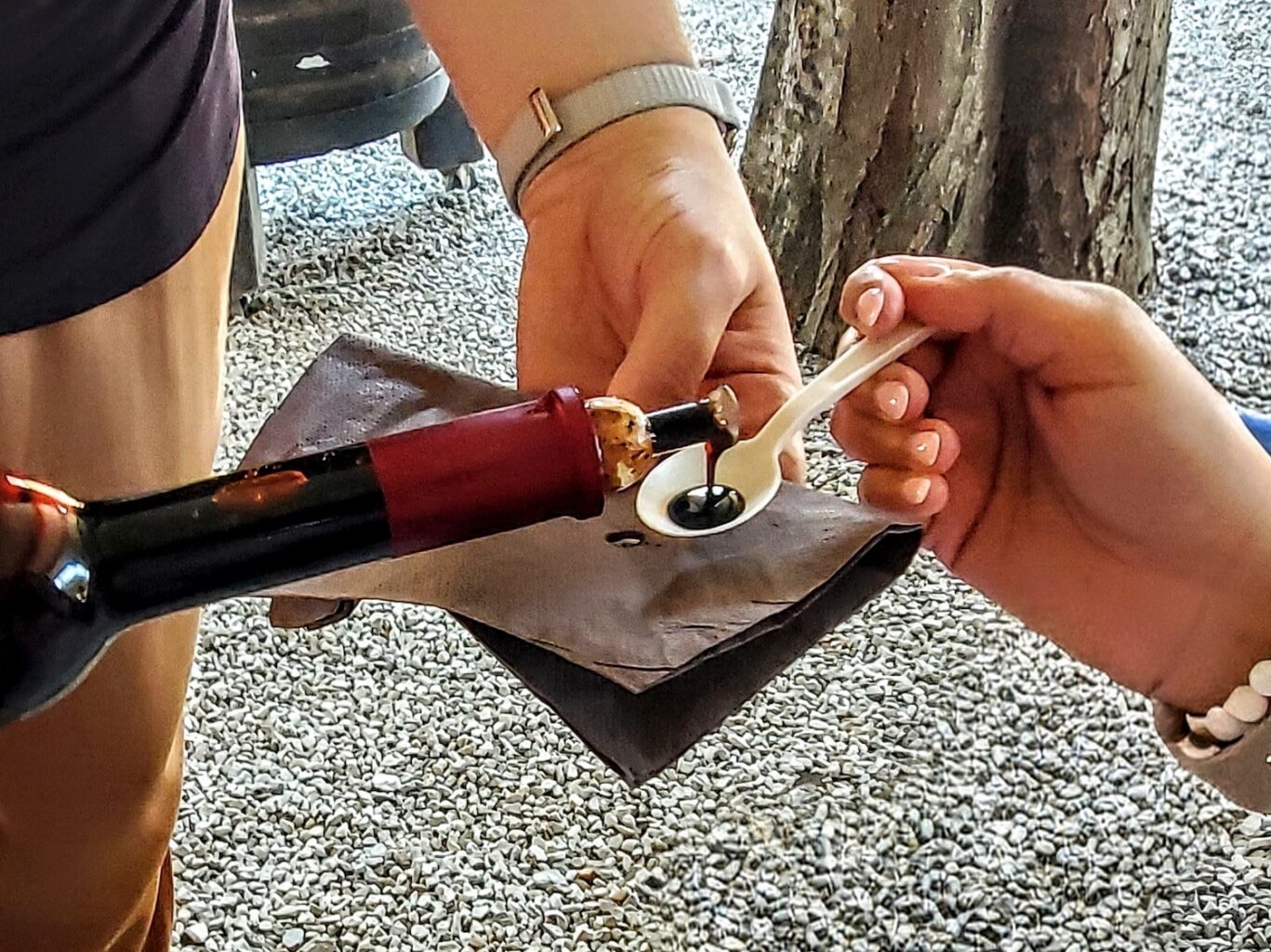
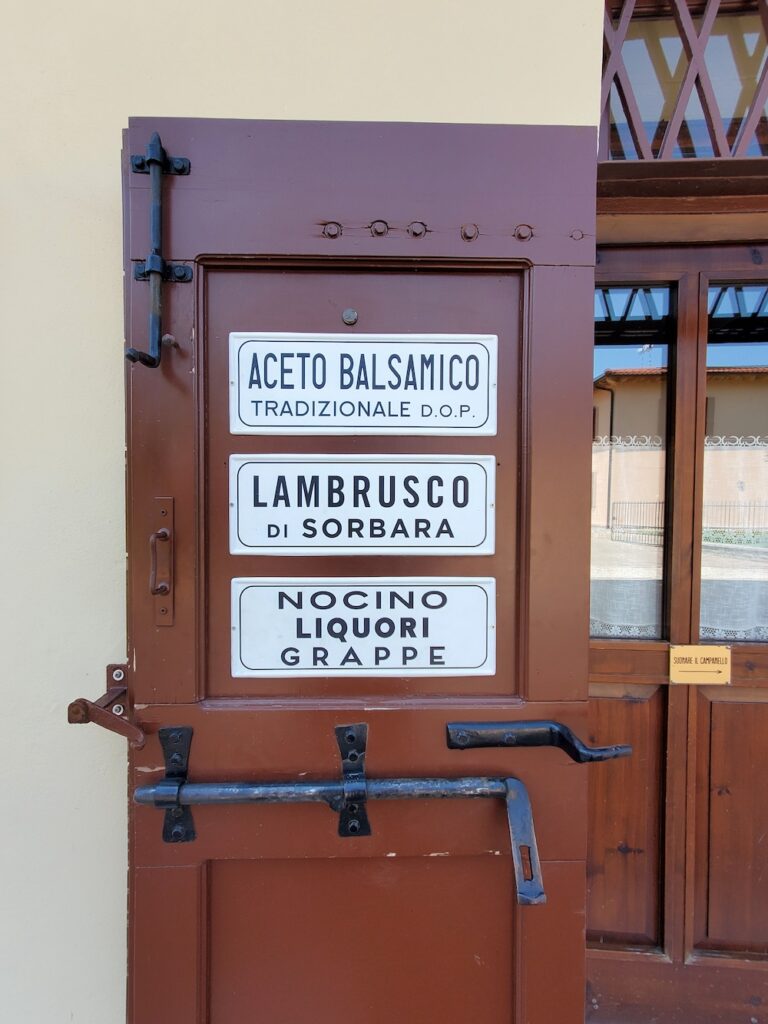
The white tasting spoon hovered over my palm as my host tilted the gold-capped spherical bottle and deposited a few drops of Aceto Balsamico Tradizionale di Modena DOP into it. It was like receiving holy communion.
At family-run Acetaia Pedroni, the balsamic is handled with care and intention. In the art & science of producing artisanal vinegar, a consortium of rules ensures the highest-quality product. It is a living tradition, cultivated patiently for generations.
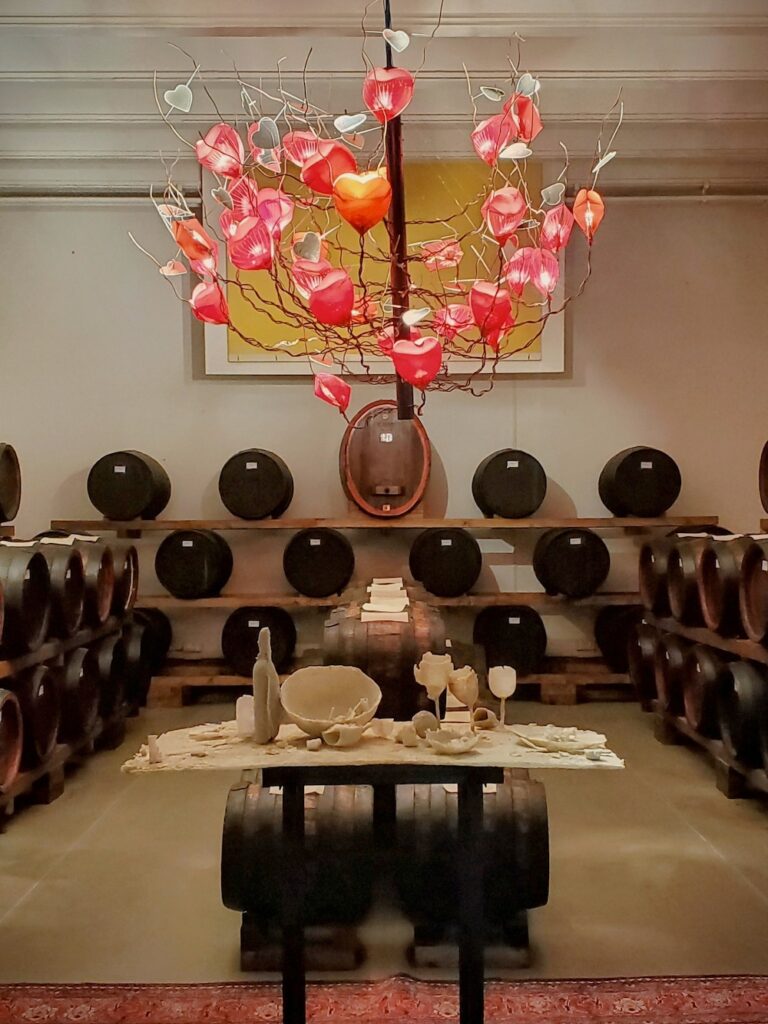
It is a ritual of devotion among repurposed confessionals and eye-catching relics of Acetia Pedroni. I climbed narrow steps into the rustic rooms as my host explained the remarkably simple but admirably complex process.
The atmosphere echoed another life, from when monks once lived and farmed here. Inside this former historic Abbey of Nonantola, meticulous rows of barrels sit beneath its original architectural beams. Each barrel is unique, made of cherry, juniper, or other local woods that subtly infuse the vinegar.
“The vinegar begins with cooked grape must and is transferred through a series of wooden barrels, where it slowly concentrates and develops its character,” host Sofia elaborated.
At the heart of the system is la madre, the mother, a living culture that helps in the transformation. My host lifted the veil off a barrel, and I looked in to see the floating madre on the surface. I gently breathed it in. The care involved is deep reverence, with the elaborate process ranging from 12 to 25 years, depending on the desired type. The coveted 25-year contains the highest concentration of polyphenols of any vinegar, a boon for well-being.
I brought my new appreciation of balsamic to a table at Pedroni’s onsite Osteria Rubbiara, lunching by its hanging gardens. As one of Italy’s oldest restaurants, it has welcomed travellers since 1862. Balsamic of this calibre is only meant to be drizzled with care, enhancing what is already on the plate. A simple drop of black gold on my sweet milky stracciatella was a revelation.
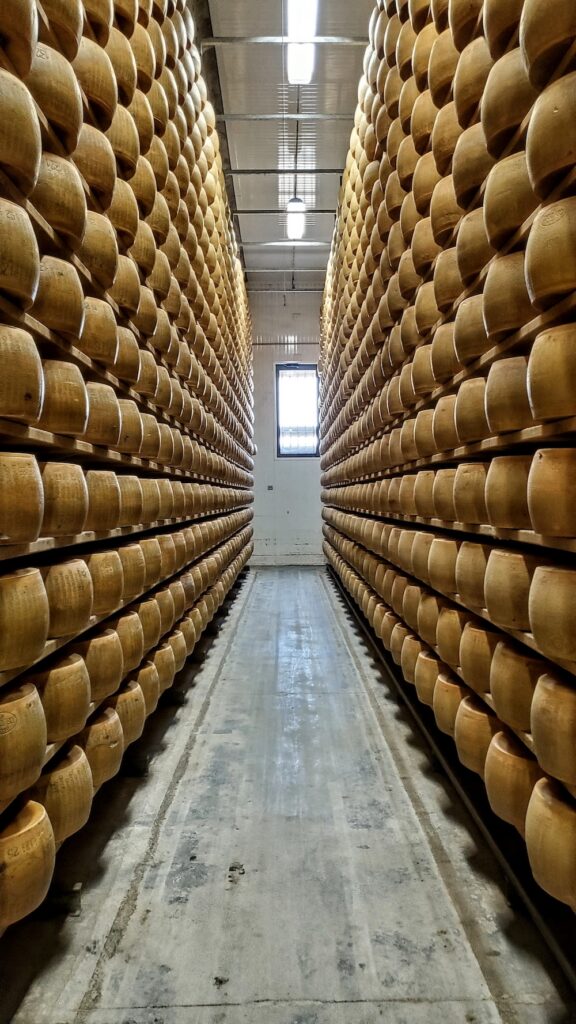
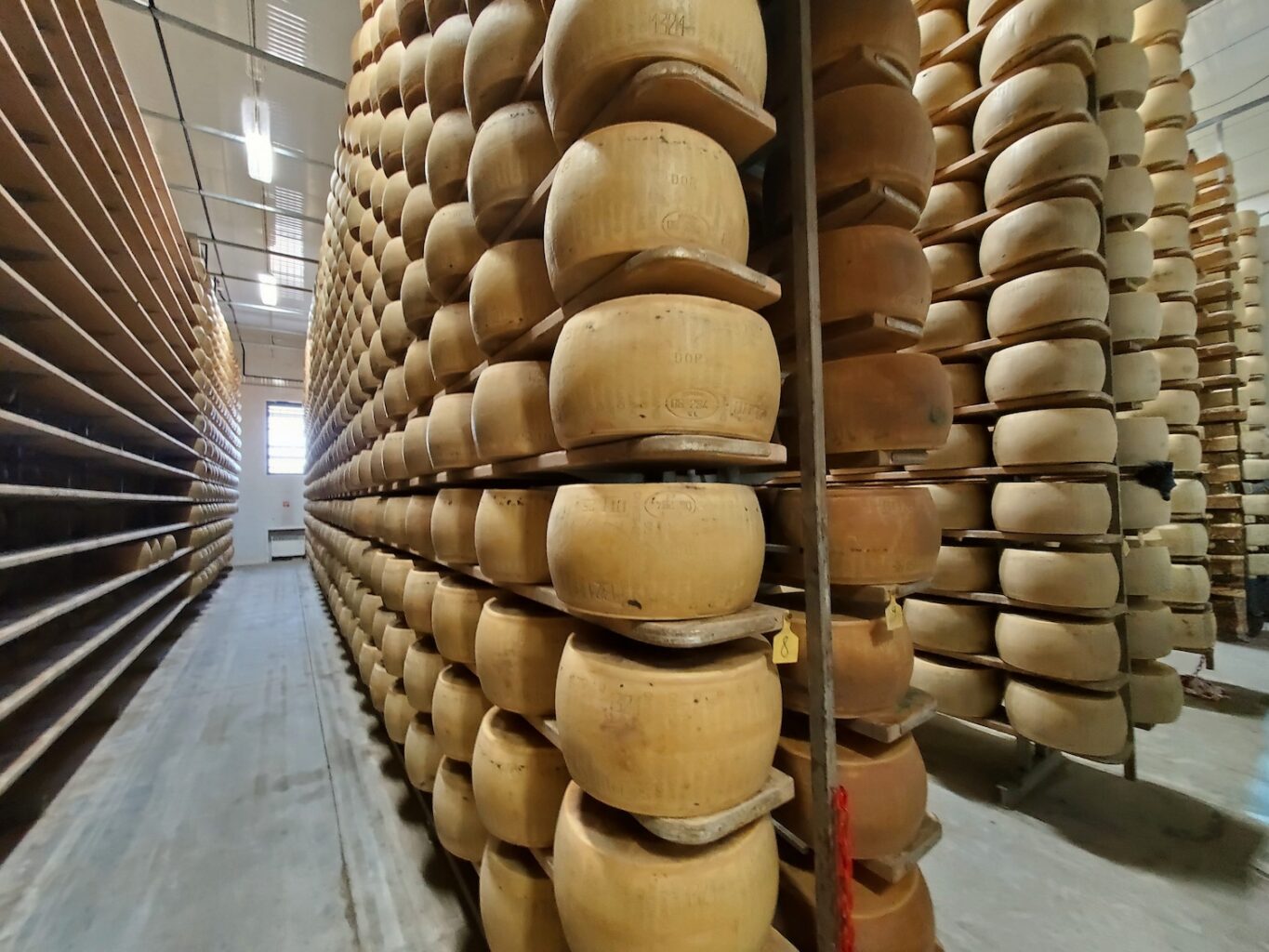
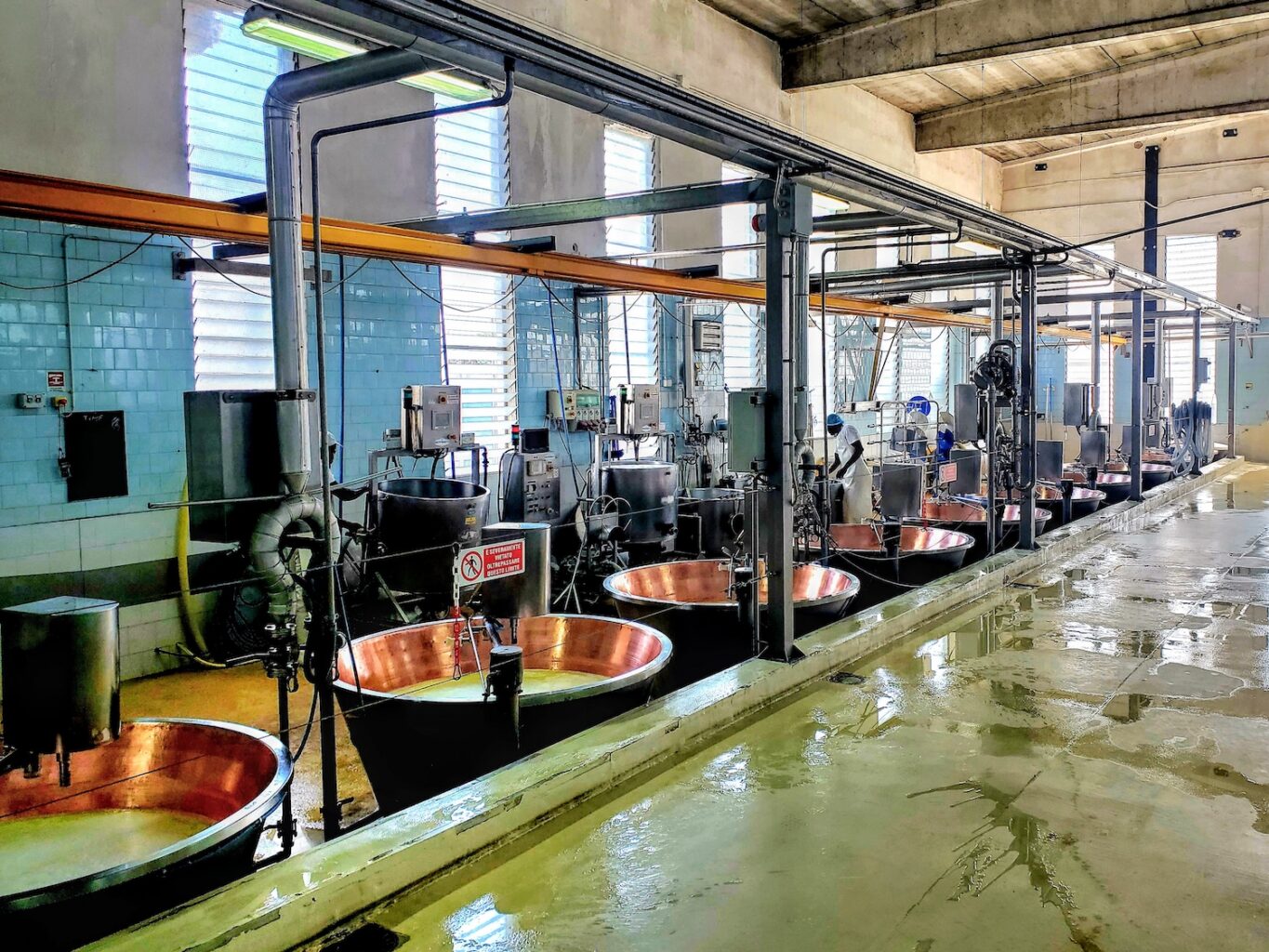
At 4 Madonne Caseificio dell’Emilia, the story begins with a shrine depicting four impressions of the Virgin Mary near the co-op’s original dairy in Modena. Inside the facility, aisles tower sky-high with wheels of milky perfection. This is an artisanal production of the great Parmigiano Reggiano, on a grand scale. In Emilia-Romagna, there’s no antipasto without Parmigiano and a balsamic drizzle.
The craft is measured by tradition, precision, and consistency. I watched the meditative whisking of curds as inspector Franco tapped a wheel with a martelletto, describing the essential components of knowing when to wait, when to listen, and when a Parmesan has become exactly what it was meant to be.
Culinary Roots at Casa Artusi
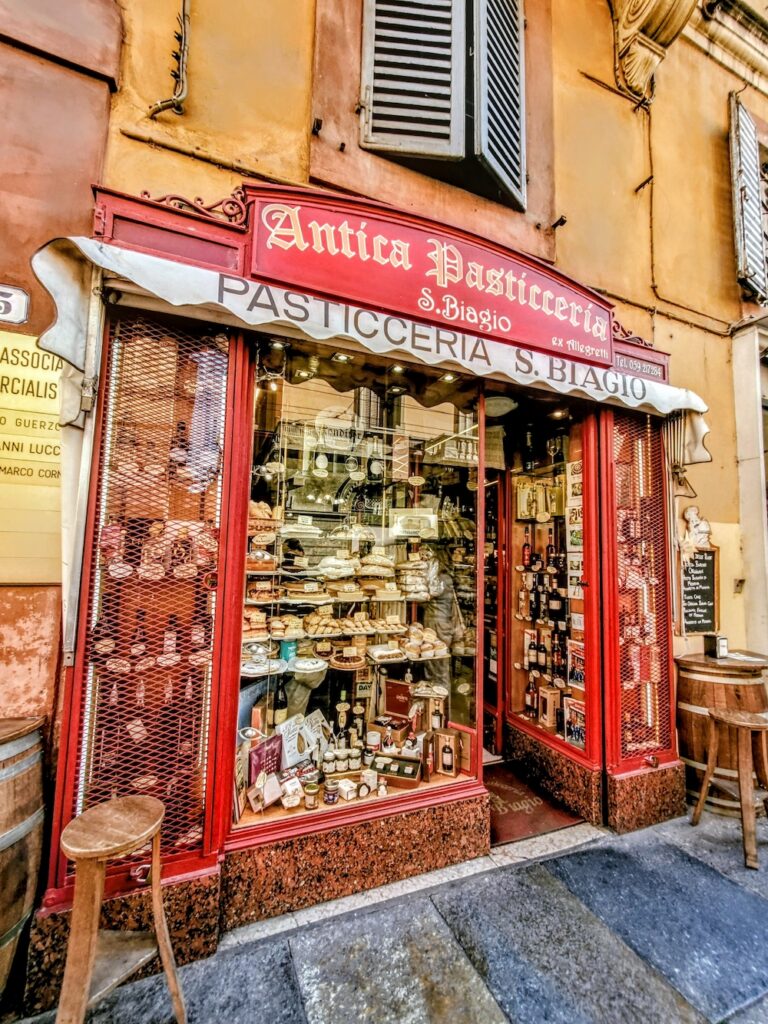
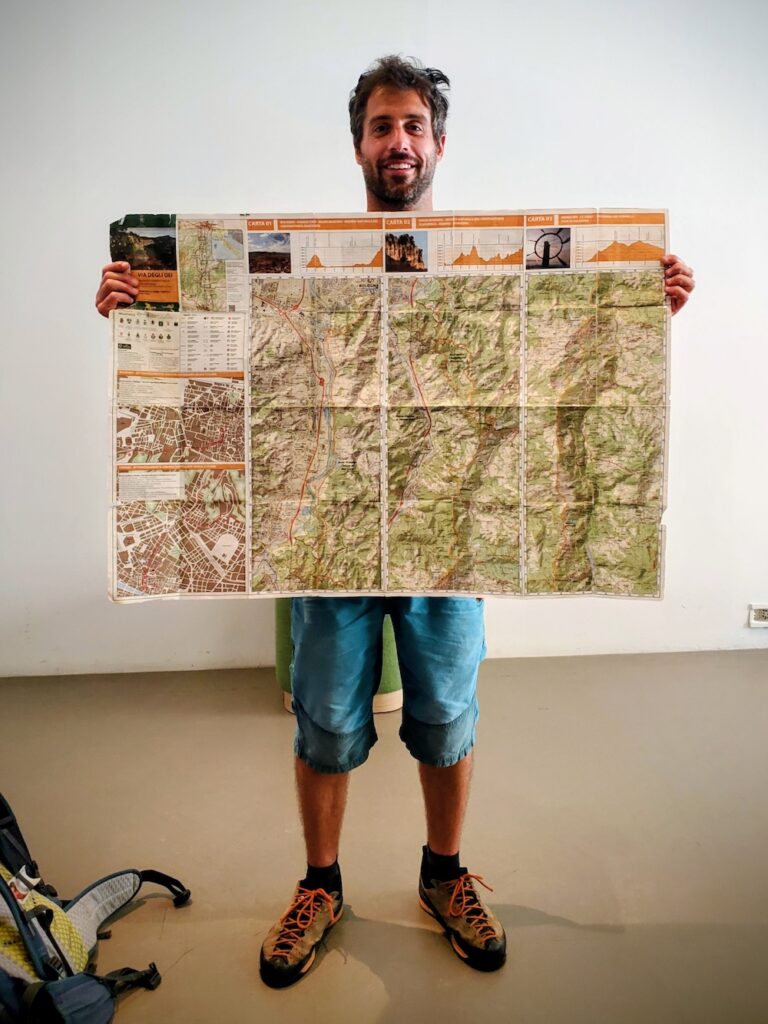
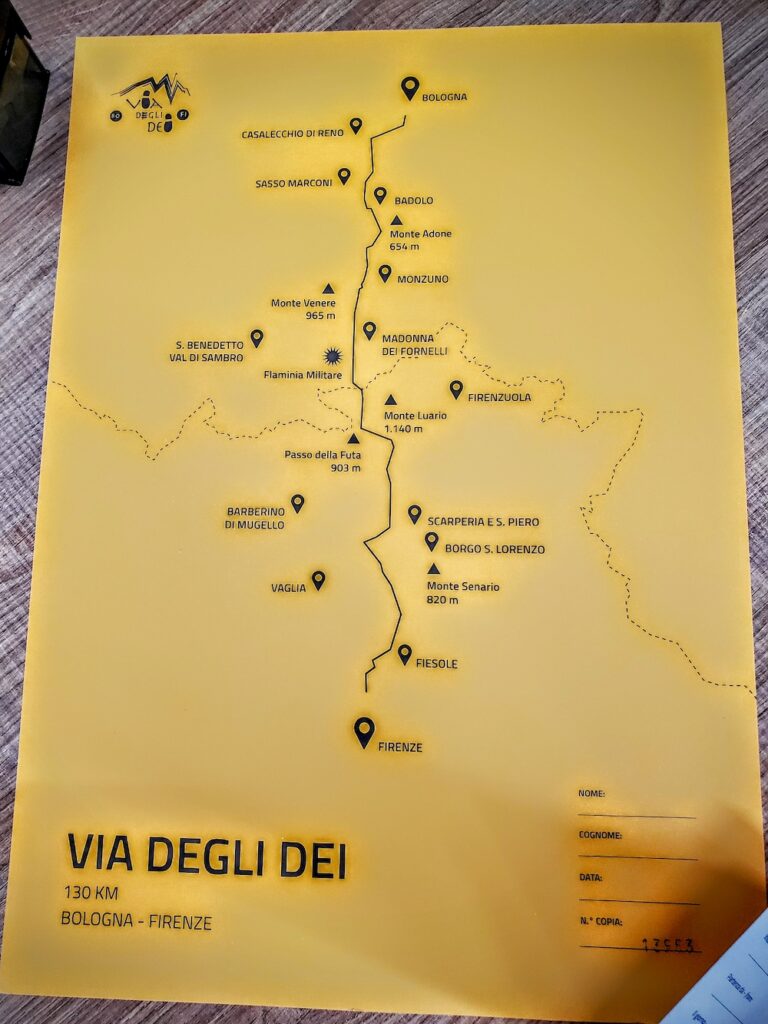
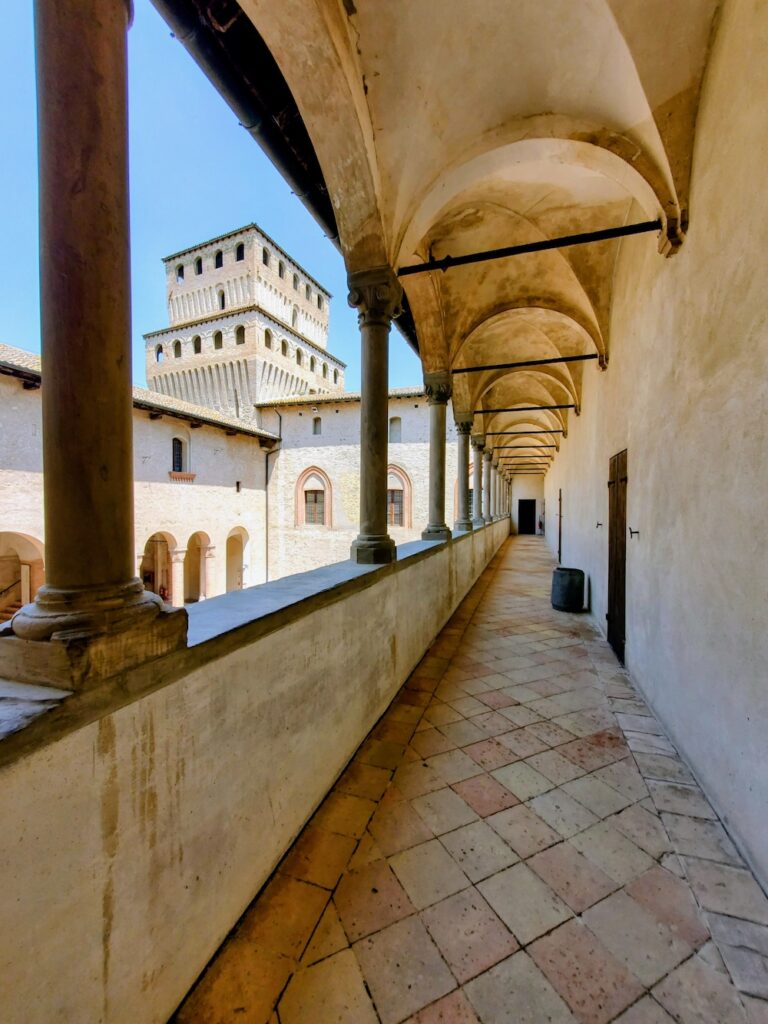
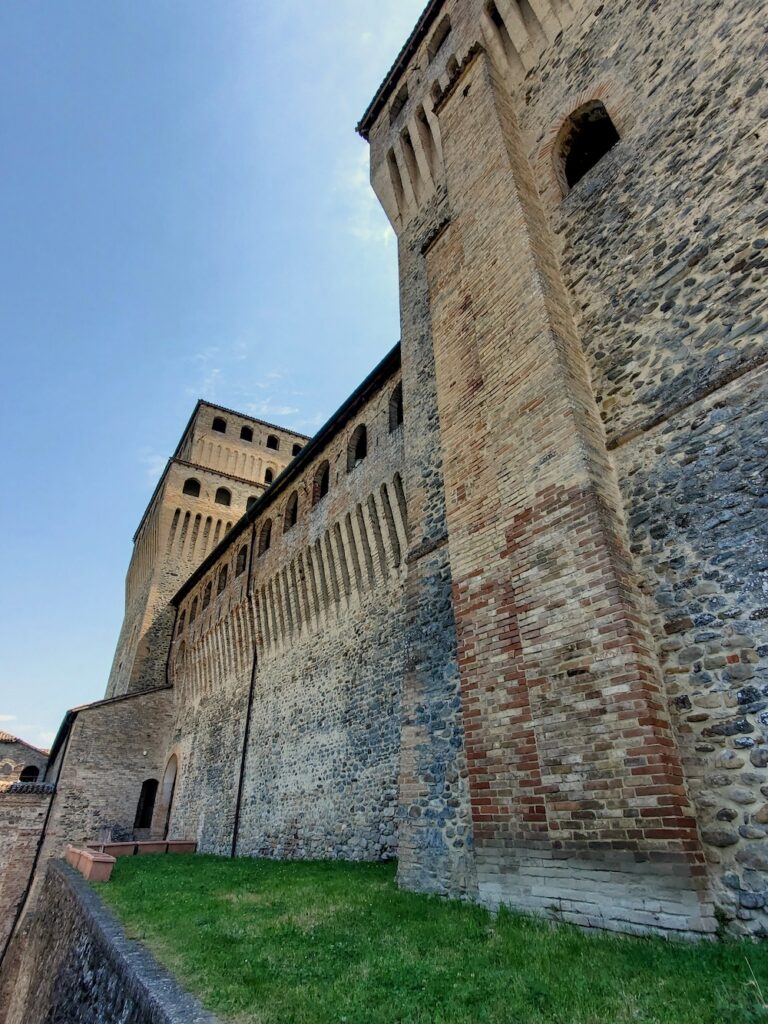
My destination was near the hills of Bologna, for a pilgrimage hike on the ancient Path of the Gods. My journey east through Via Emilia led me through fairytale castles like Rocca di Vignola, to racing Ferraris at Autodromo di Modena, getting buzzed on Lambrusco, and into kitchens with great chefs like Massimo Battura, a local treasure and major advocate for the region’s food heritage.
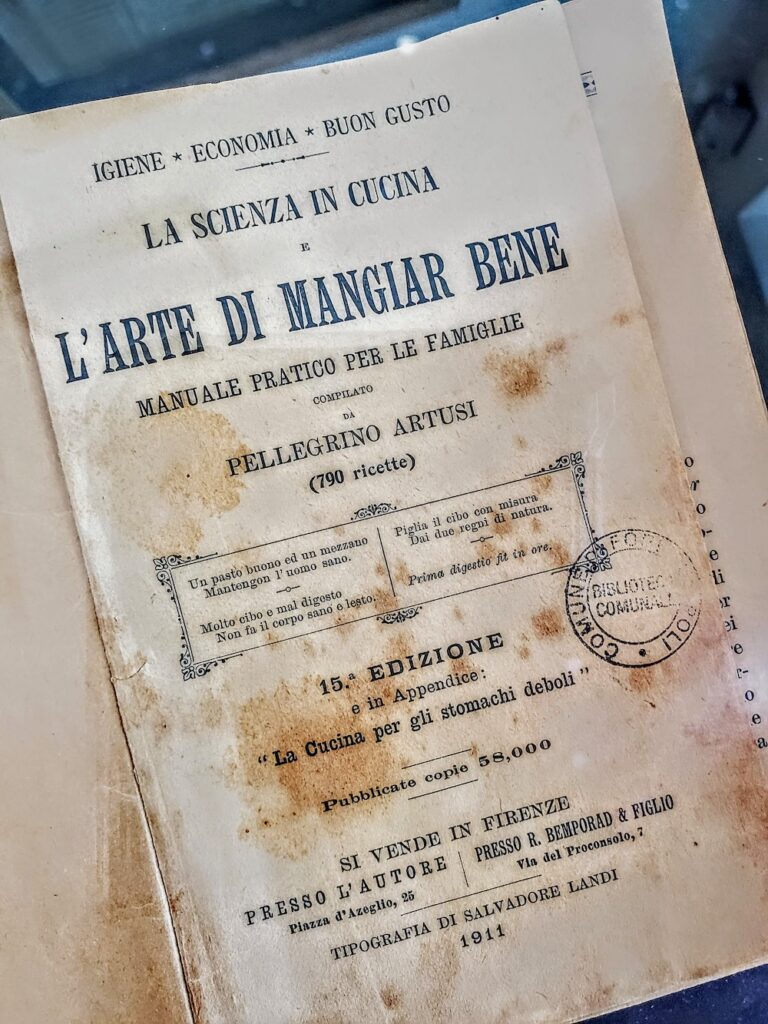
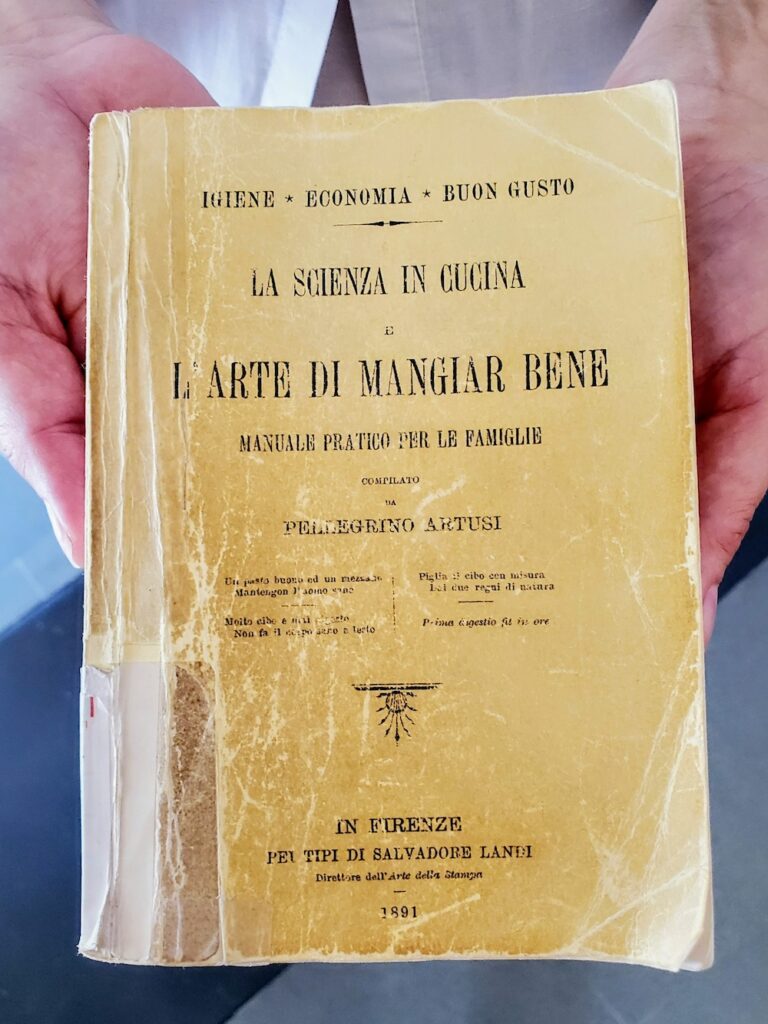
Few places tell that heritage story as passionately as Casa Artusi, an institution devoted to the region’s agricultural and culinary roots. Named for Pellegrino Artusi, who curated Italy’s classic recipes in a landmark cookbook in 1891, Casa Artusi preserves recipes and techniques while keeping them alive. It’s an institution that’s helped establish Italian food’s place on the UNESCO Intangible Cultural Heritage List.
The designation recognizes the rituals and social practices of the Italian table as a living heritage that binds Italy’s communities. Casa Artusi is more than an ally; it’s a guardian.
Located along the culinary map of Via Emilia, Casa Artusi offers an immersive experience providing practical knowledge, rich history, stories, and meaning. One day, I found myself with sleeves rolled up in Casa Artusi’s kitchen.
School was in session, and an intimate lesson in tortelloni and all kinds of delicious things with a nonna was underway. The rhythm of pasta-making follows its own rules, many of them learned through repetition rather than written instruction. The dough is massaged and worked with a physicality I’d never considered before. It’s a ceremonial dance.
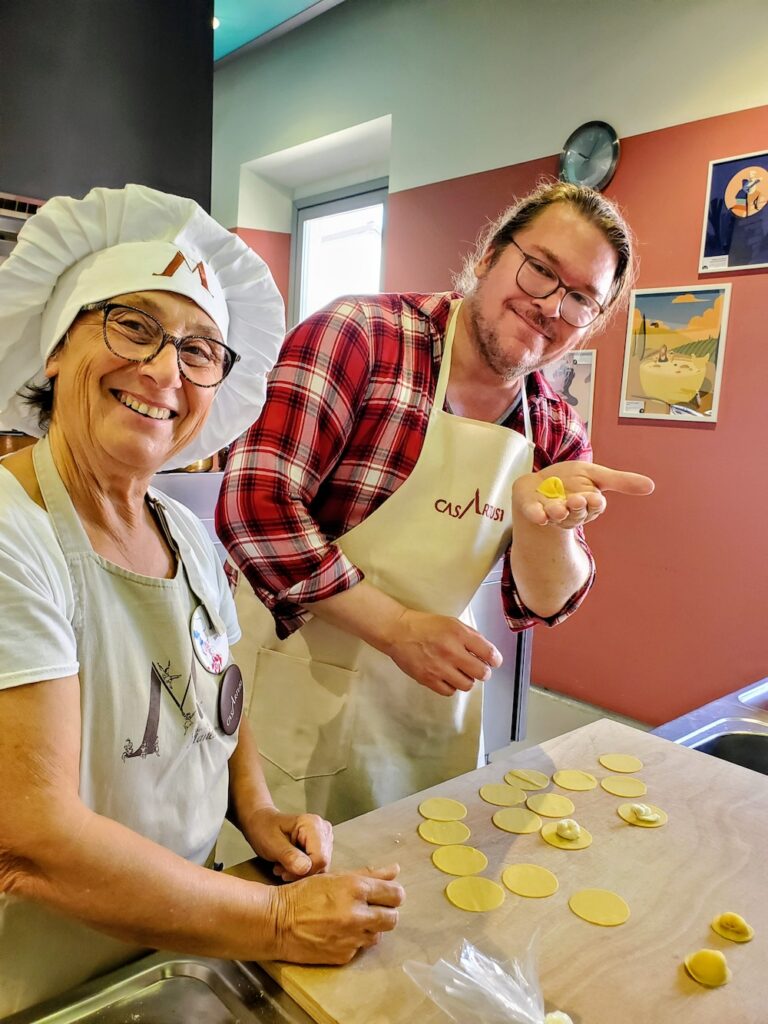
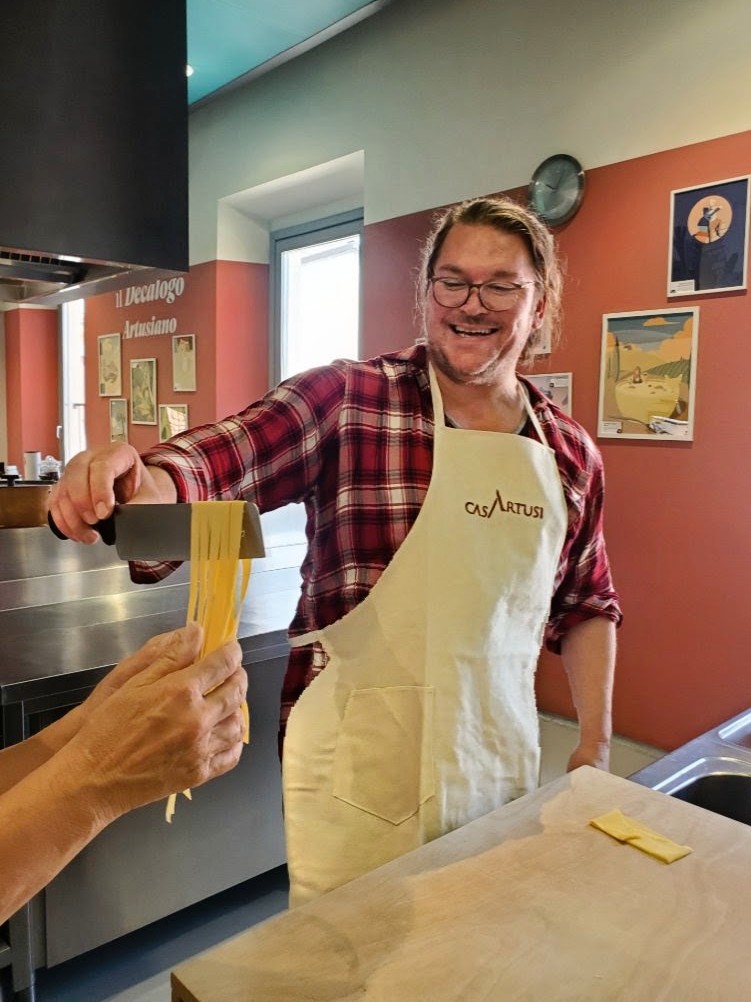
“It’s not in the arms… the strength is in the legs,” my nonna showed me, rocking back and forth.
That’s old-school insight I hadn’t heard before, and it works! People love the trend of visiting Italy and learning to cook with a local nonna, and Casa Artusi organizes that with the local ladies.
Here, it’s not just theatrics for social media; it’s the real deal. The House of Artusi feels less like a museum than a living archive, where Emilia-Romagna’s past is kneaded, rolled, and shaped into something to be savoured.
