Five belongings, a forthright sailing instructor, and a week off the coast of Crete. After leaving her London PR career, Alexandra Kafka learns how little she needs aboard—and begins to question what deserves space in her life back home.
By Alexandra Kafka
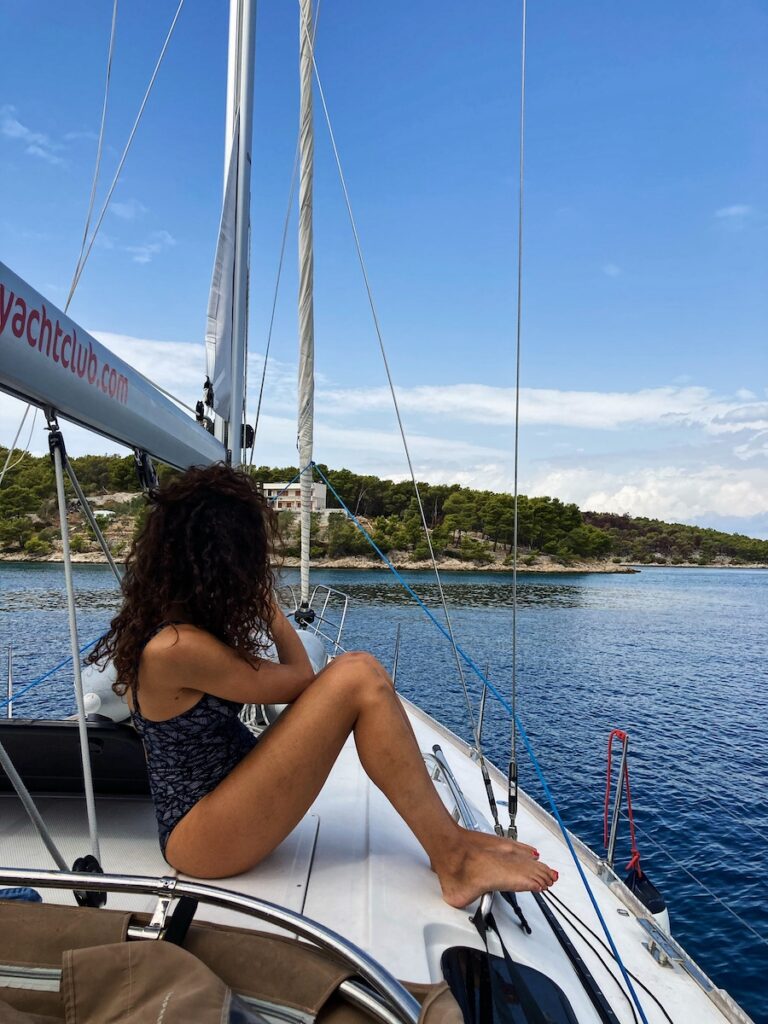
On the first day of my sailing training, I climbed aboard in Loutro, a little village on the south coast of Crete, with a bag so big I looked as though I were moving house. Vitamins, snacks, books, three different kinds of jackets. I would have smuggled in a hairdryer if I could.
George looked at the bag, then at me, then back at the bag.
“What’s all this?”
I didn’t know what to say.
“You know what? Take it all back. I want you to return with five things only.”
Five? I had packed five types of sunscreen alone.
I’d come to Crete after walking away from the PR career I’d spent years building in London. I wore my workaholism like a badge of honour and liked being the person who could take on one more thing, even when my day was already full. I finally had the freedom to decide what came next, and I had absolutely no idea.
While I tried to figure that out, I kept coming back to a childhood dream of learning to sail. I used to imagine how free I’d feel under sail, knowing the wind would have a say no matter how carefully I’d planned my day. After years of trying to stay on top of everything, that appealed to me.
I came back with a toothbrush, a swimsuit, a hat, denim shorts, and a single bottle of sunscreen.
He looked at my little bag. “You want to be a sailor?”
He explained how little room there was on the boat and how precious fresh water was.
“At sea, every item has to earn its place. Less is more.”
Waiting for a signal
It would be days before I heard George say that much again.
Whenever I tried to make conversation on deck, he’d cut me off.
“What now? Enough talking.”
Once the sails were set, I could go hours without anyone needing me. I’d thought that would come as a relief, but within a couple of days I was rushing up on deck each morning to see if we’d reached a port with a signal. I just wanted a quick scroll through somebody else’s life on Instagram while there was so little happening in mine.
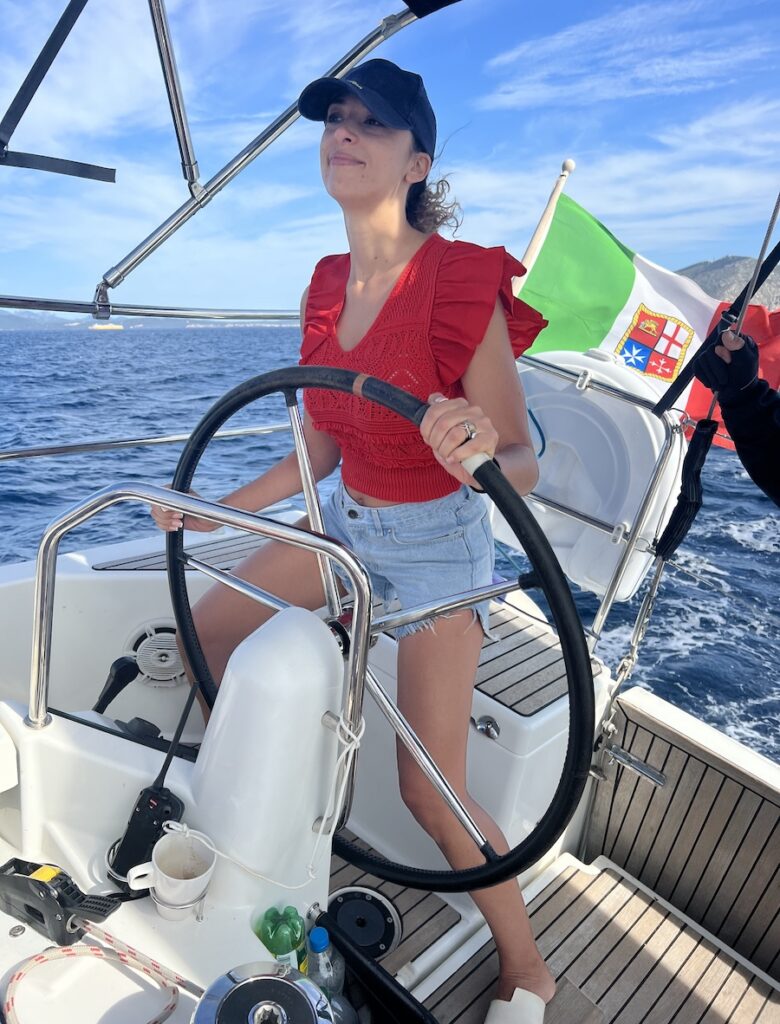
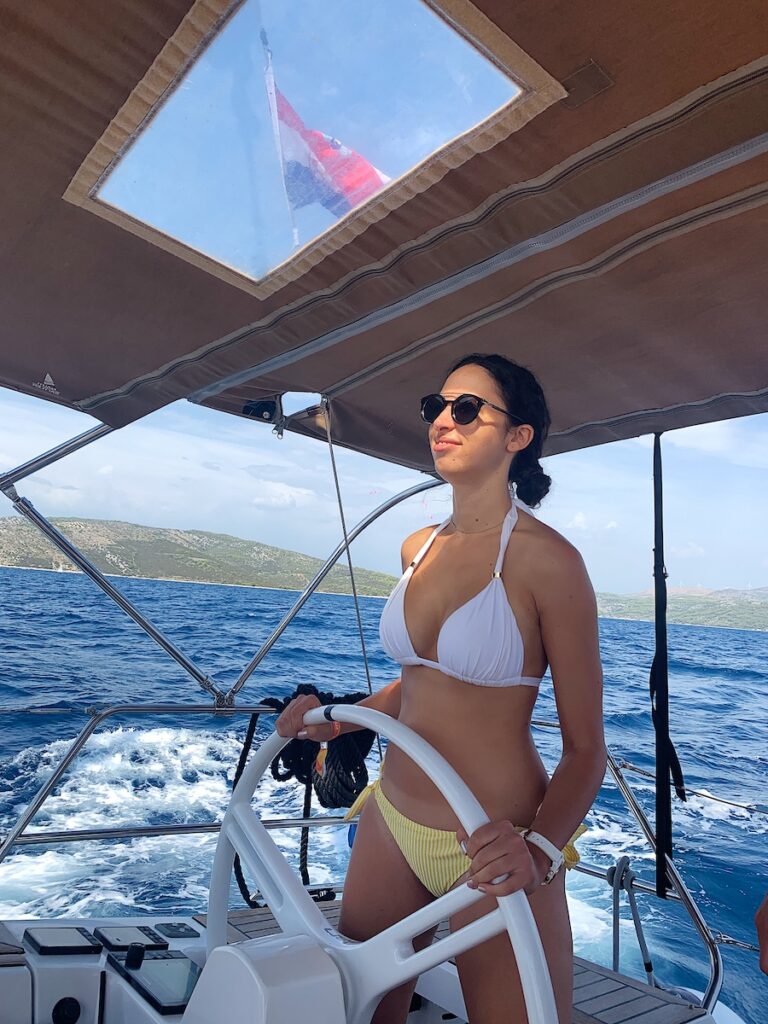
By the fourth day, I knew a few knots and was getting a feel for when to steer closer to the wind. George handed me the helm and stretched out at the bow with one of his unfiltered, hand-rolled cigarettes. I was starting to think I might actually be good at this.
Then my phone vibrated twice.
Signal.
I pulled it out. A gust hit the sail, and the boat lurched onto its side.
“Ease the sheet!” George shouted.
I froze, the rope clenched in my hands. Water came over the side.
“Let go!” George yelled. “Let go!”
All I could think was hold a little longer, grip tighter, hold on.
So I did.
George lunged across the deck and tried to pry my fingers off the rope one by one. Somewhere between the shouting and the panic, I saw him laughing.
The rope burned across my palm as it tore free. The boat righted itself. Only then did I see the blood.
George wiped the salt from his eyes and looked at my hand.
“You do this everywhere, don’t you? Holding on is what holds you back.”
Making room
The following evening, as the sun went down, George looked at my bandaged hand and took the last sip of his ouzo.
“Alright, princess,” he said, almost casually. “From now on we’re anchoring only in coves. Time to disappear from earthly things for a while.”
“You mean without internet? For days? What if something happens to us?”
He turned toward the sea as though he were studying the weather. I knew the decision had been made.
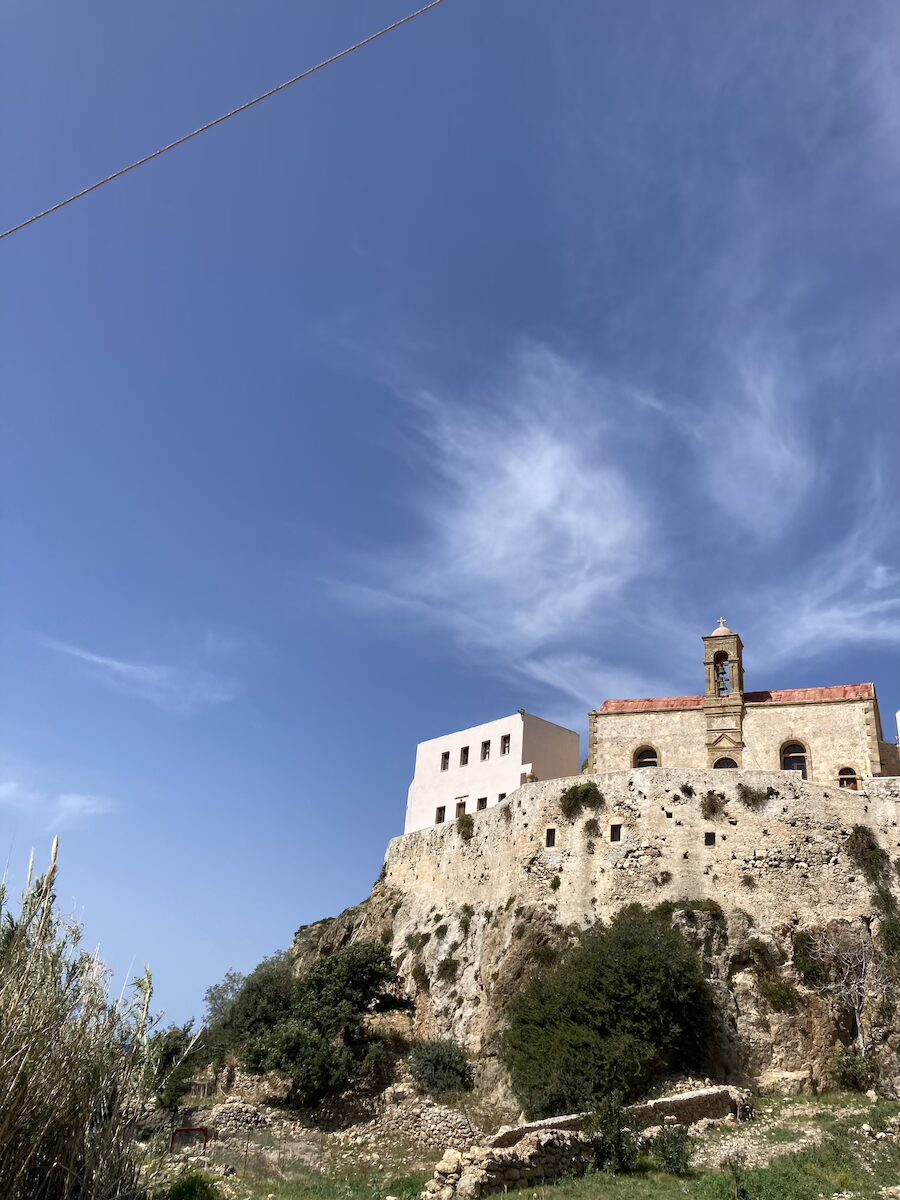
In the villages along the coast, someone would see us passing and pull up another chair. Before we’d even said hello, there’d be a glass of tsikoudia in each of our hands. Soon the table would fill with dakos topped with tomato, graviera cheese, and kaltsounia pastries. I grew up in Greece, so I knew philoxenía, the way we welcome a stranger. In Crete, I kept seeing it in that small gesture of making room for one more plate.
On our last night aboard, the mark from the rope was already fading from my palm. I stayed out on deck and fell asleep under the stars for the first time.
I wondered why I’d waited so long.
As we sailed back toward Loutro, I realized I had a signal again. For the first time all week, I didn’t feel like reaching for my phone.
Back in London
Three months later, I was back in my London flat, standing in front of a wardrobe I could barely close. I could almost hear George beside me. “Less is more.”
Until then, I’d never thought of myself as a minimalist. I started with one drawer. Out went clothes I never wore, books I’d kept for no real reason, and gadgets I hadn’t used in years. I kept going until there was little left in my bedroom besides a mattress, a book, and a candle. What surprised me most was how much easier it was to fall asleep in that room.
Once I’d cleared out my wardrobe, I began to notice how quickly I filled any space that opened up in the rest of my life. I’d squeeze one more thing into an already full calendar, and whenever I did have a few minutes to myself, I’d reach for my phone. Sometimes I was just bored. Other times, scrolling was easier than sitting with whatever came up in those quiet minutes, whether it was impatience, fear, or sadness.
I’d spent years asking myself what else I could fit in. George had left me with a harder question.
What has actually earned its place?
Alexandra Kafka is a Greek writer, former public relations executive, and founder of Urban Yoga Lab and Oxyzn, where she helps organizations build mental fitness at work.
She lives in Thailand and is writing her first book, Zen Warrior: What 34 Countries Taught Me About Mental Fitness.
Connect at alexandrakafka.com | LinkedIn | Instagram