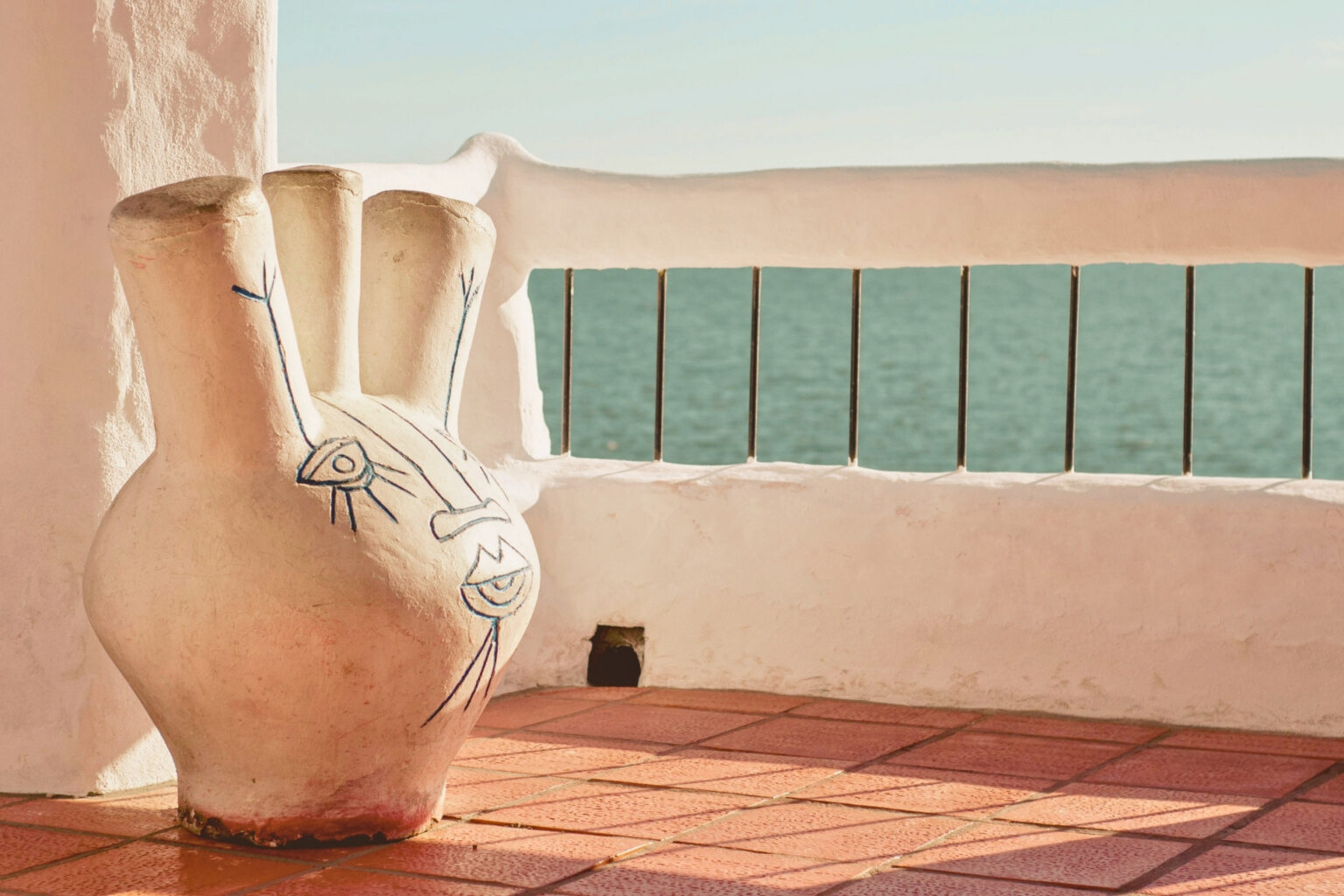
In a wellness landscape filled with promises of transformation, these questions can reveal the true depth of a retreat experience.
By Adele
The retreat has become one of the most recognizable formats in wellness travel. The offering has multiplied, the options have diversified, yoga, meditation, breathwork, walking, creative practices and nutrition, and with them, the way they are described and chosen has changed. Those searching today face a broad, often visually uniform landscape, in which distinguishing has become harder than finding.
Across digital channels, many offerings share the same visual codes and the same language of “transformation.” A spectacular location or an impeccable feed attracts attention, and what works tends to be imitated: so even very different retreats end up resembling one another in how they are presented.
But the resemblance is only the first layer. The real question, then, is understanding where communication ends and where an experience with substance begins. Beneath the surface, differences exist and deserve careful reading.
This is where the curatorial perspective begins: making legible the quality of what already exists, drawing the retreat out of a purely promotional logic through observation, selection and connection.
In recent years, a key point has emerged. Discipline alone is not enough. The depth of a retreat depends on the alignment of three elements: the teacher, the place, and the vision. Their balance allows the experience to become a space-time that leaves concrete and lasting traces.
The teacher is central not only to technical preparation but also to the ability to build a solid context and lead with empathy. Today, reliability is sought more than effect: those who choose want to understand who leads and how, and whether that presence remains steady throughout.
The difference shows in how the teacher reads the group, modulates the pace, recognizes when to slow down and when to give room. Even apparently secondary details, attention to rest times, or the way a session is opened and closed, change the quality of the experience.
In a mixed group, an experienced teacher recalibrates the progression and introduces an integration pause when concentration drops; a teacher focused on scenic impact proceeds by the schedule instead, despite the group’s signals. The first choice generates trust and presence; the second, fatigue.
Place matters more than it seems. In wellness, it is often associated with luxury or visual impact, but what truly makes it an active part of the experience is coherence. Materials, spatial layout, light, acoustic insulation, these are details that determine how time is lived. A simple room, proportionate to the group and well considered, can support the work better than a spectacular but poorly attuned location.
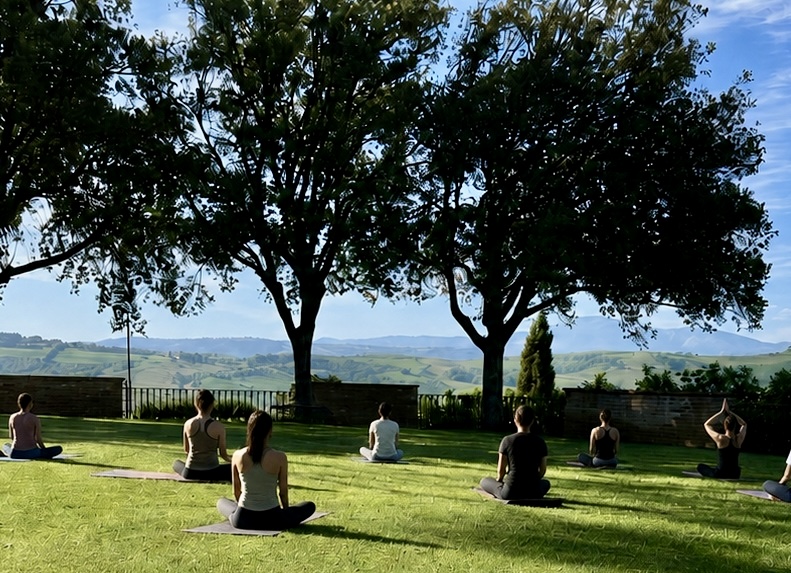
Consider a farmhouse set in the countryside: if the common room echoes and meals are consumed in cramped spaces, noise compounds fatigue; if, instead, there is a well-laid table, silent nights and the freedom to move through nature without rush, the day finds its own natural rhythm. The size of the group also matters: the right numbers allow everyone to feel part of something without getting lost.
Vision is the most difficult element to read, but often the most revealing. In the language of the sector, promises of change are so generic they empty themselves: “rediscover yourself”, “transform your life,” “return to the essential.”
A retreat led with discernment does not rest on this register alone—it builds conditions. It creates a temporary threshold in which certain sensations and emotions become clearer: fatigue, overload, the need for silence, the desire for stability.
The clarity of a vision is recognized in what the programme chooses to cultivate, and in how it orients the return. For example, two meditation retreats of the same duration may have different intentions: one offers a new technique each day, breathwork, body scan, walking meditation, visualization, accumulating variety; the other works on a single practice, deepening it each day from different angles.
From the programme, they may appear equivalent. The difference emerges afterwards: from one, you return with many experiences; from the other, with something you truly know how to do.
What remains, a transferable practice, a different relationship with time, a greater capacity to recognize one’s own needs, is the most concrete way to measure a vision.
Three simple gestures are often enough: a brief morning routine, ten sustainable minutes; an evening decompression ritual, with reading, breathing and low light; a weekly moment of reflection, such as an hour free from screens or a slow walk. Perfect formulas are not needed. Continuity is.
When teacher, place and vision are aligned, the experience is not an escape from reality, but a different way of re-entering it. Coming home becomes an integral part of the project.
3 Questions to Ask Before Looking at Dates and Prices
No detailed forms or complex comparisons are needed, only clarity about what you are looking for. The three questions work as a personal compass: they help filter by coherence, not by taste.
Who leads, and what is their vision?
A long biography, on its own, is not enough; what matters is how that path takes shape in the way someone leads.
Is the programme built with rhythm, or is it simply a sequence of activities?
Look for the presence of pauses, integration time, and unscheduled space. A programme that doesn’t breathe rarely leaves room to feel.
Is the place coherent with the practice?
Consider light, acoustics, communal spaces, group size, and access to nature. A beautiful but poorly attuned place can undermine the work.
Three questions, but they help those who want to participate shift attention from what appears desirable to what can truly sustain the experience. Curating to choose means this too: refining a clearer way of reading, less guided by image and more able to discern.

Adele is Italian and was a retreat organizer before founding RI.retreats, an independent magazine dedicated to the storytelling and curation of international retreats. The selection looks at the coherence between the teacher’s vision, the place and the content, and at what an experience can leave over time. The RI matrix draws on Italian words evoking return and renewal—ricominciare, riconnessione, rigenerazione: beginning again, reconnection, regeneration—and reflects the project’s vision.
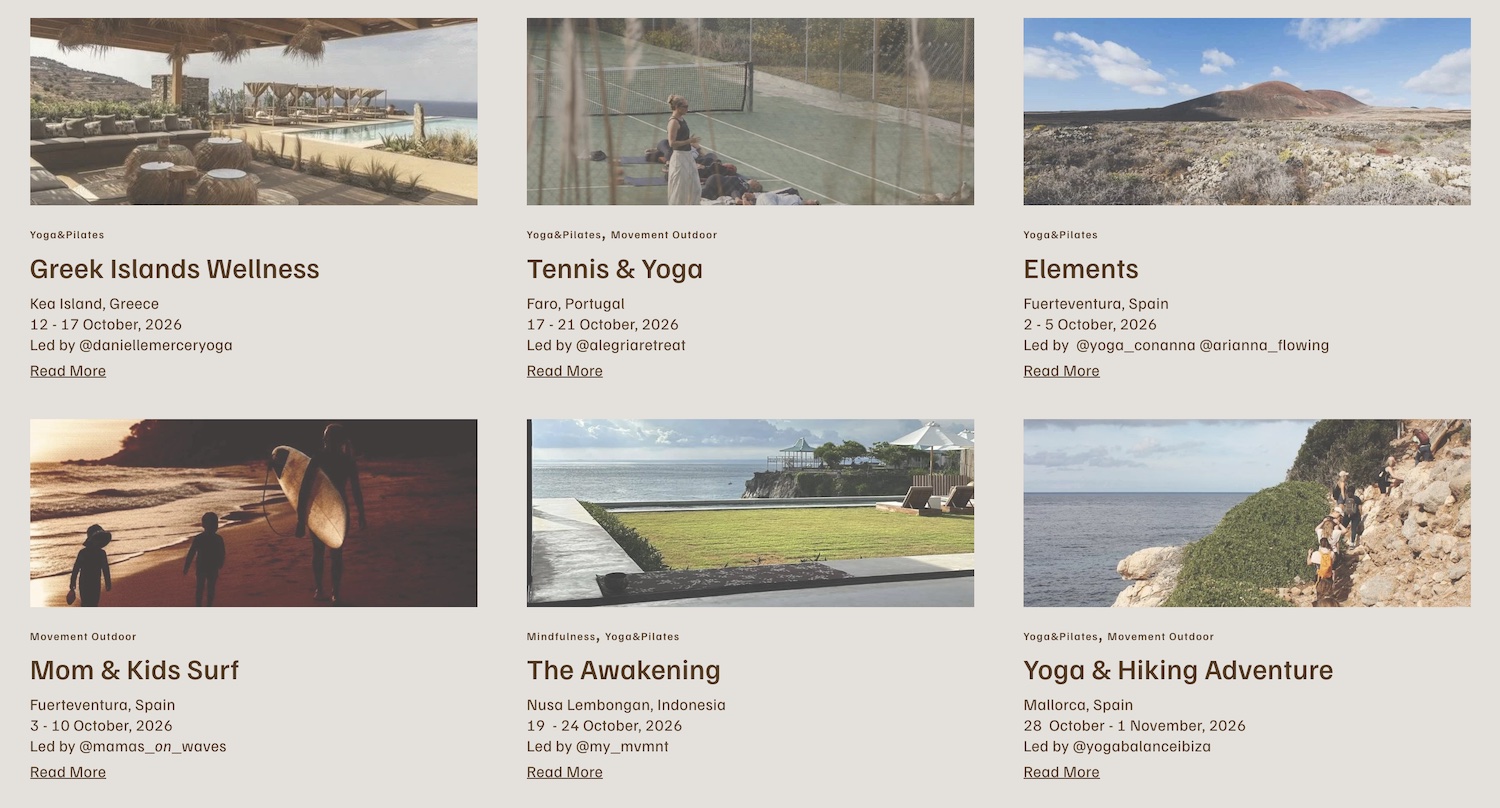
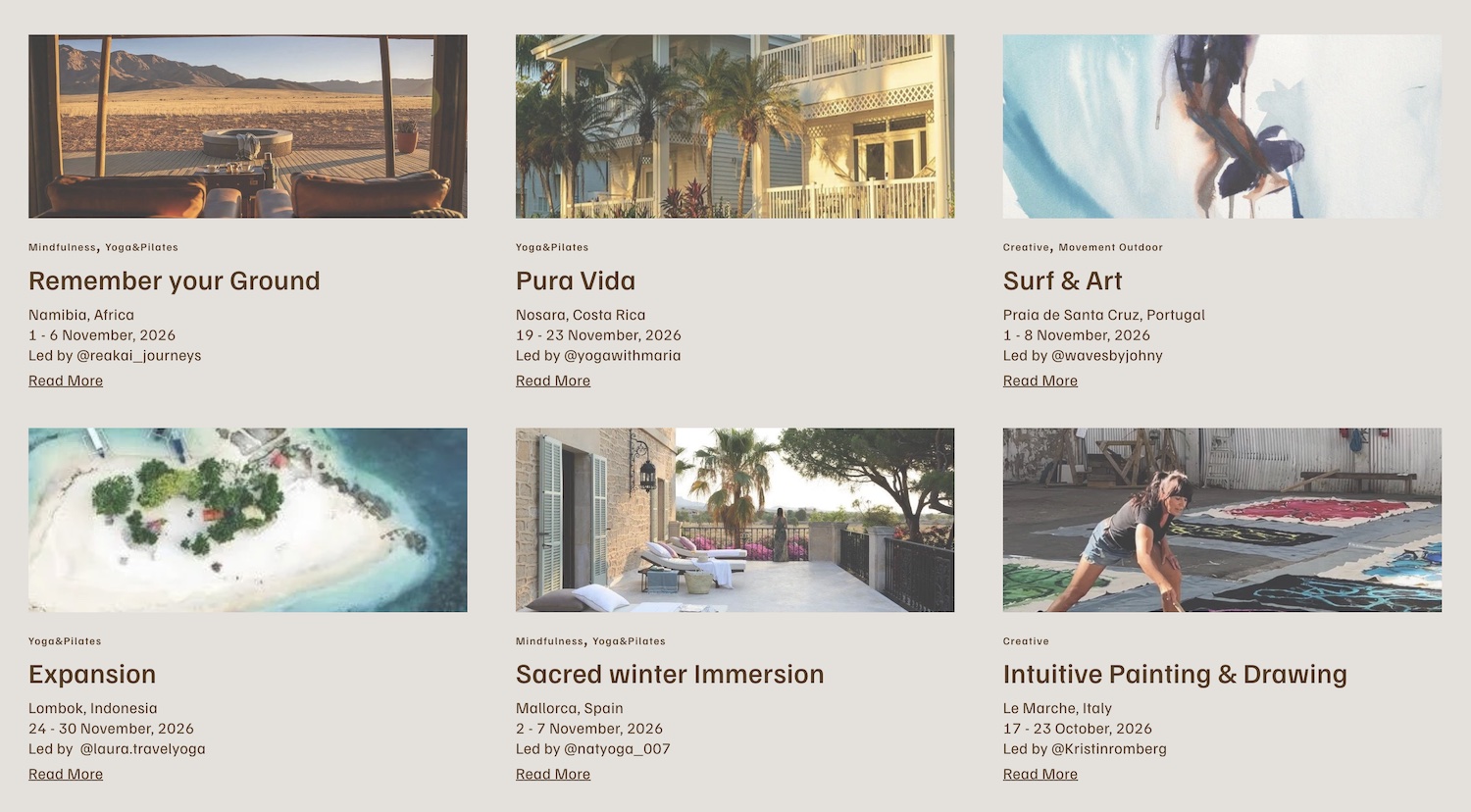
From this vision also comes Explore, the section of the site designed to gather a selection of international retreats curated by RI.retreats. Its aim is to meet the need for a simpler, more accessible way to search for retreats, offering clearer, more focused orientation within a broad, fragmented, and often visually homogeneous landscape.