
By Catrina Conway
The land looks like a soft animal sleeping; its gentle, gorse-covered hills tumble down toward the sea, glistening amber in fading evening light. As night drags its dark cloak across the bay, stars raise their somnolent heads, blinking shyly into magnificence. Soon, my entire universe is incandescent with starlight, satellites race overhead, and Jupiter glows gold in the zenith.
This is the Isle of Sark.


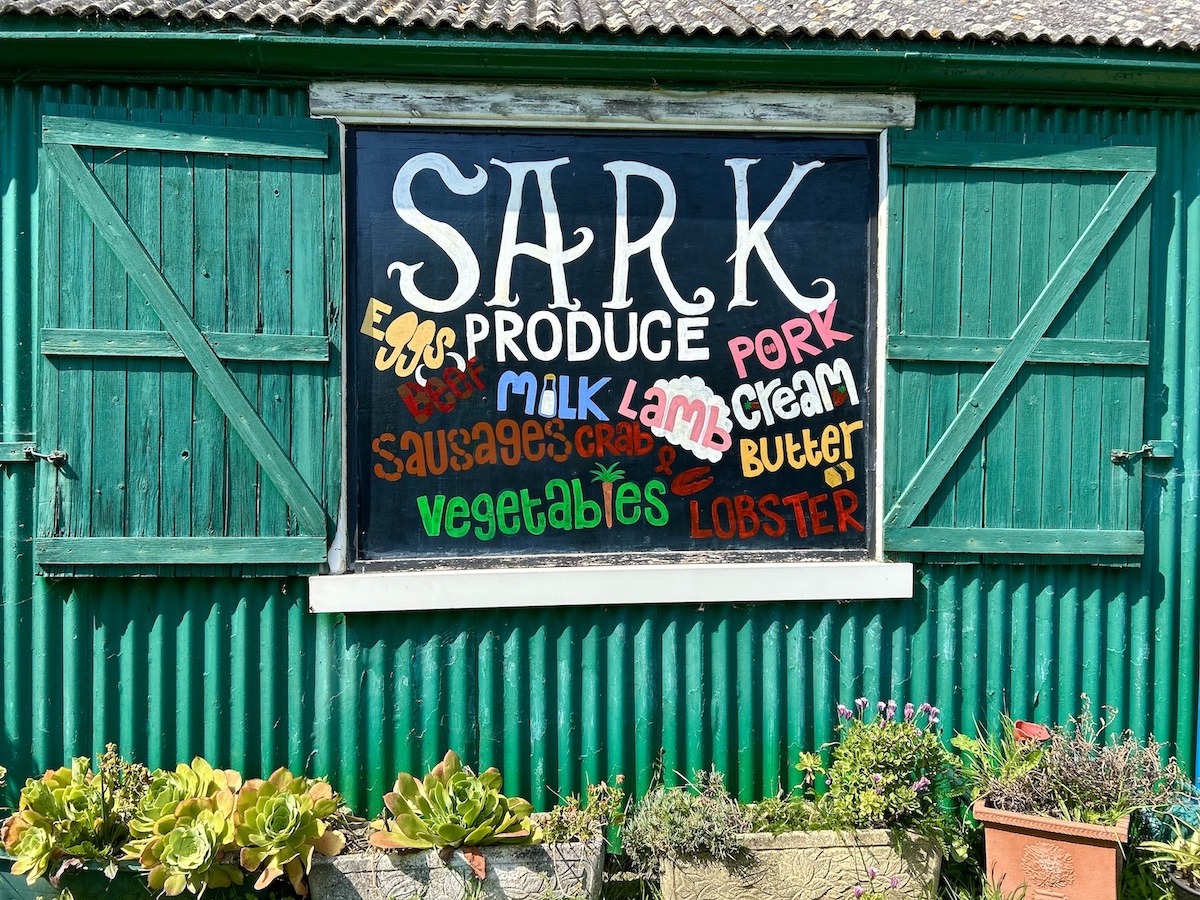
The great French writer Victor Hugo described this tiny island as “a sort of fairy castle, full of wonders.” At just 3 miles long by 1.5 miles wide, it’s the smallest of the four main Channel Islands, nestled between England and France. It’s located just east of Guernsey, from which it can be reached by boat within an hour, passing the island of Herm and, on a lucky day, schools of dolphin.
Sark is a land of many peculiarities, as Europe’s last feudal system (which ended in 2008) and being completely car- and street-light free (making it the world’s first Dark Sky Island in 2011). But the island also has a burgeoning wellness scene, meaning it’s an ideal escape for anyone seeking an immersive and unique travel experience.
I am here to uncover all there is to do on this jewel of the Channel Islands.

I first join a sensory foraging walk through Dixcart Woods, led by Jolie Rose. Carrying a wicker basket and wearing a dress that flows with the breeze, she greets the group enthusiastically. She hands us each a cup of mugwort tea, encouraging us to spend a moment of silence with the land. We then set off to explore the woodland’s gifts.
She first brings our attention to three-cornered leek, whose scent permeates the air. It can be used in many recipes, including a pesto that Jolie has pre-made and passes around for us to taste. It is fresh and green and utterly delicious.
We proceed through sunlight-streaked woods and clouds of English bluebells. We learn about the succulent taste of navelwort and the medicinal qualities of nettle and dandelion.
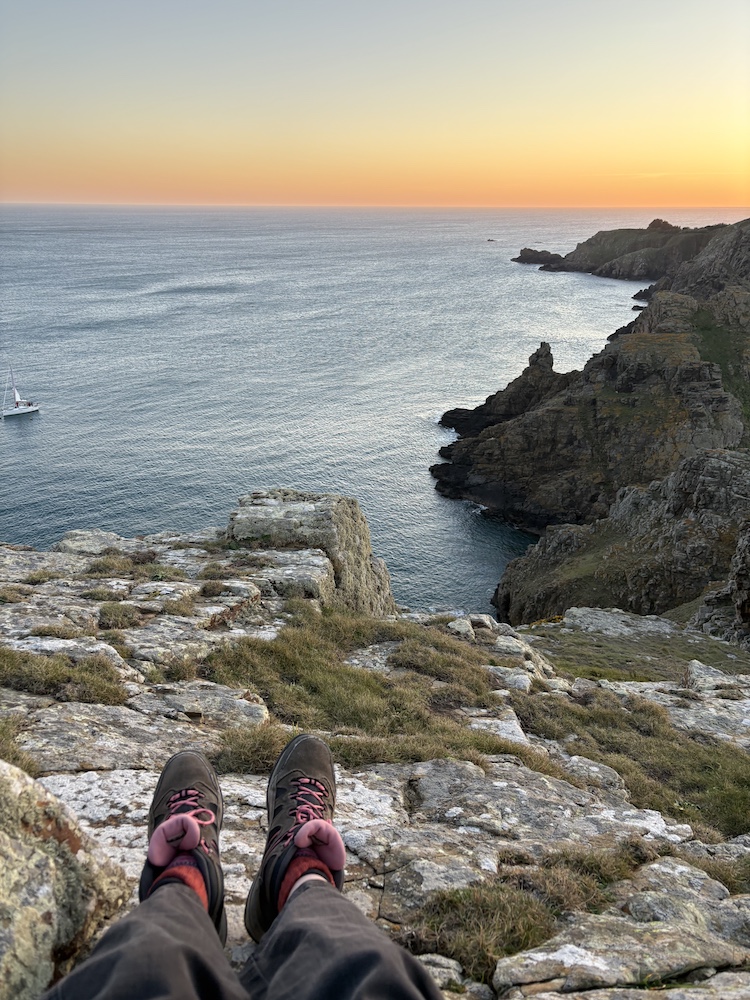
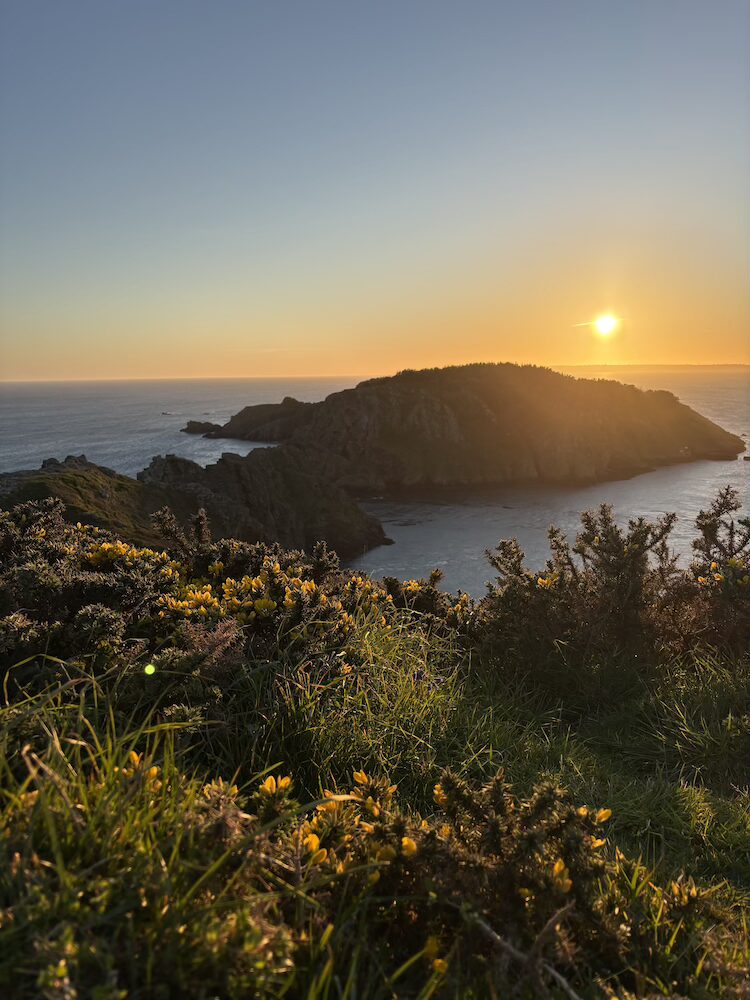
“Lots of plants give you clues as to what they’re good for,” Jolie explains, pointing to a hawthorn, whose heart-shaped berries are good for the circulatory system.
We come upon a clearing where Jolie tells us to sit by ourselves and focus on a single plant. I settle by two lesser celandine flowers, radiant in dappled light. They quiver in the breeze, seemingly impatient with the roots that ground them.
“Think of who your plant is,” Jolie guides us. “And write down what you imagine.”
We regroup and share our findings, laughing at the unique personalities each of us has conjured up for the woodland life.
Jolie’s parting gift is fresh bread and more pesto, which I enjoy under an ivy-covered pine.
The next day, I meet artist Louise Hill. She greets me with a warm smile, hopping off her bike and grabbing an armful of paints from its basket. As we search for a place to paint, she tells me that she previously lived in London and then Tanzania before making Sark her home in 2021.
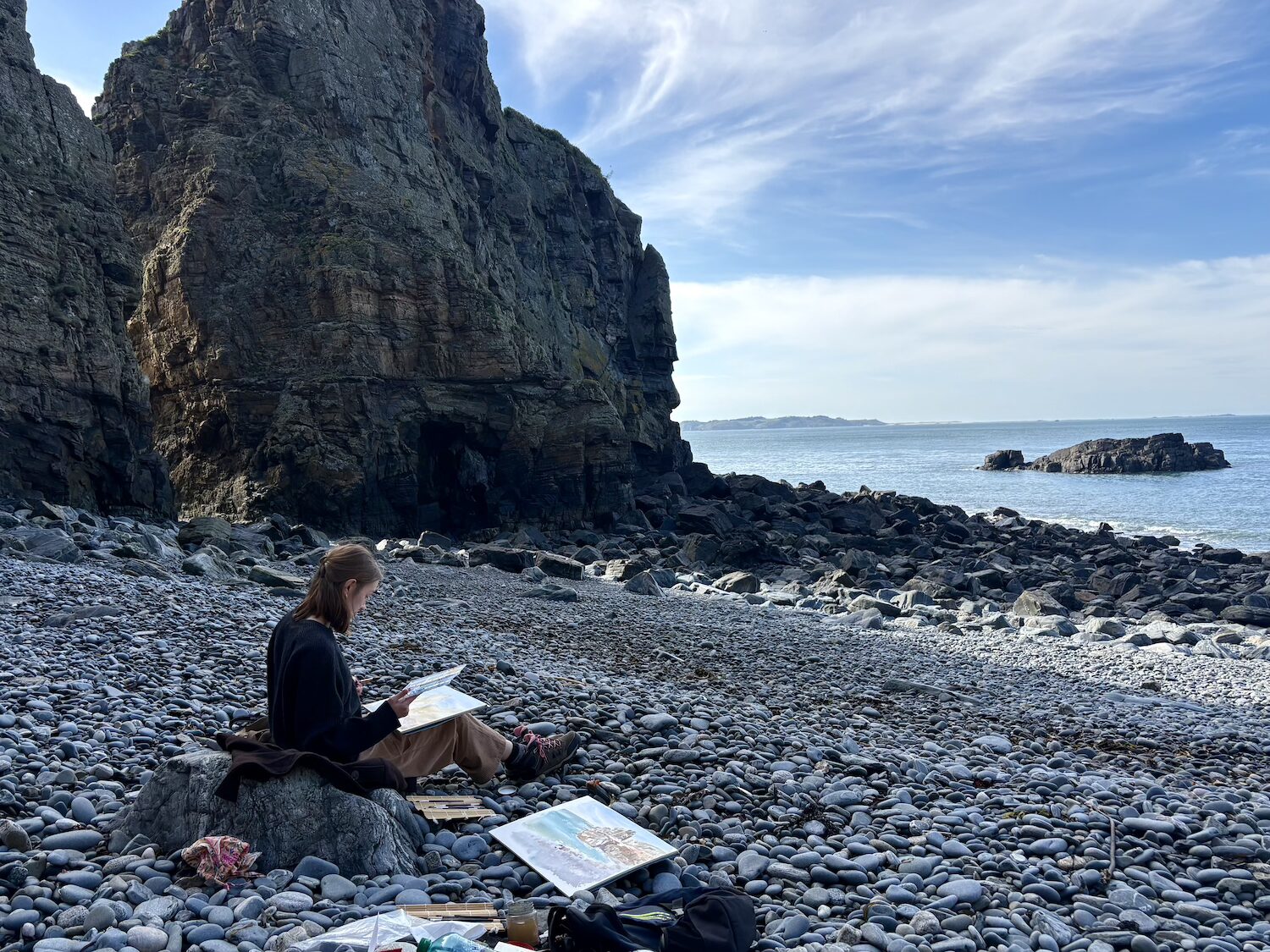
“People come to Sark for tranquillity and safety… It’s a place to get back in touch with yourself and how simple life can be, to not be surrounded by the material stuff – traffic, noise, people,” Louise explains as we clamber down some steep stairs and settle on a wide beach, strewn with smooth pebbles and seaweed. We gaze out over the sapphire sea dotted with rocks that rise from the water.
Louise guides my painting, first encouraging me to close my eyes and tune in to the island’s soundscape—the pulse of the waves, the wafting wind, the distant calls of guillemots. She shows me how to focus my eyes on the crevices in the cliff, the sky’s reddish hues, and the different ways water hits the land. I feel my body shift into an earthly, grounded state.
The hour slips away like water through hands.
After we part ways, I while away my afternoon in Sark’s art gallery, which showcases a beautiful range of artwork including Louise’s and some impressive wildlife photography.
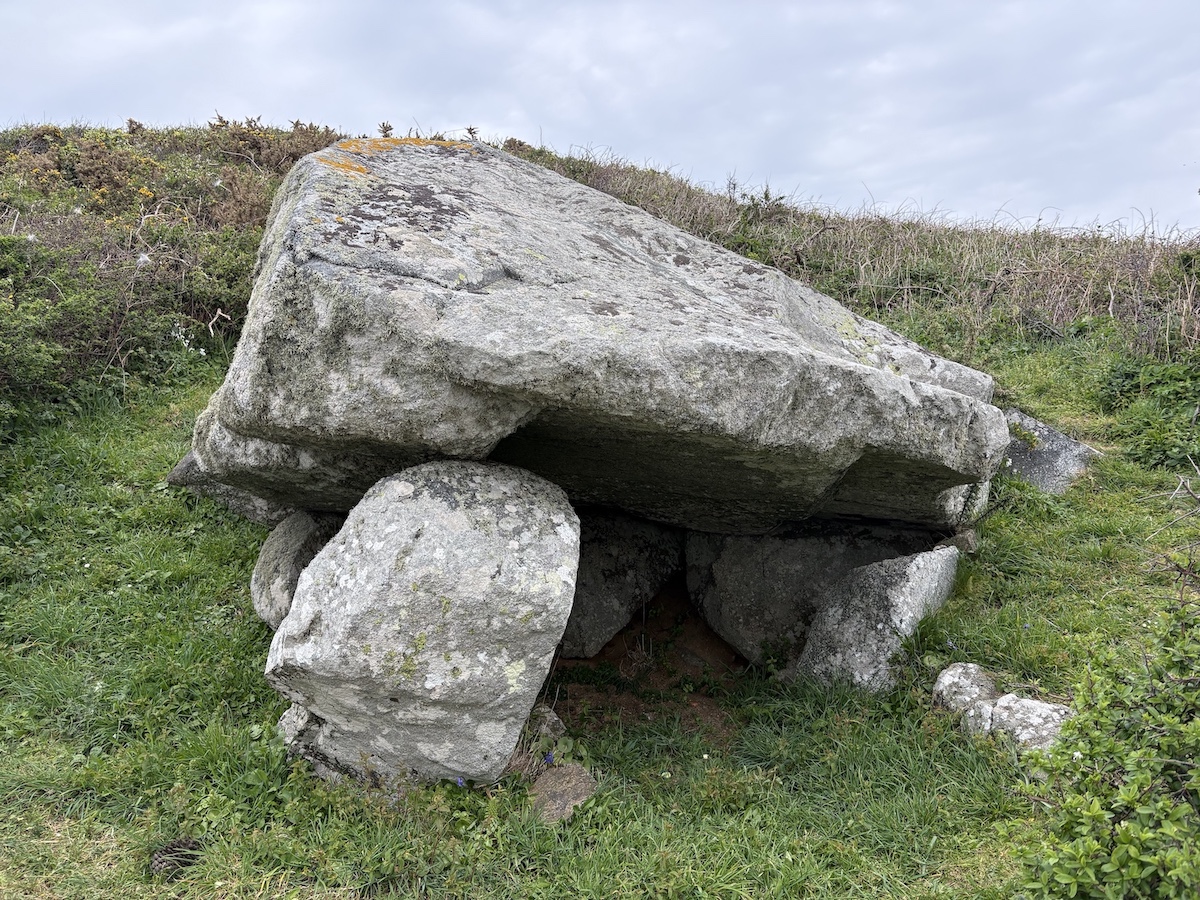
The next few days I spend hiking Little Sark, which is dotted with historical monuments such as the Dolmen (a Megalithic stone structure) and the Silver Mines (shut down in 1845). Little Sark is linked to Big Sark by La Coupée, an impressive limestone isthmus that offers sweeping sea views.

I also enjoy a swim in Dixcart Bay with the Sark Sirens, a group of cold water swimmers who welcome me with open arms. The water is refreshingly cold, and I leave feeling rejuvenated. I treat myself to an afternoon dozing on the beach, empty of anyone but me.

On my final night, I meet Edd Stone, secretary of Sark Astronomy Society, at the island’s observatory. As his dog, Rufus, sits atop my feet, Edd explains the magic of Sark’s night sky.
“The thing that makes Sark unique is that it’s a dark sky community; it’s not a remote area… I can’t think of anywhere else in the UK where there are people living directly under dark skies,” he explains as he focuses the telescope on Jupiter.
I put my eye to its lens.
I see the gas giant up close, its stormy surface striped. I revel in the closeness of the universe. Edd points out Cygnus, which leads directly to the Milky Way, soon to spill into its full summer splendour.
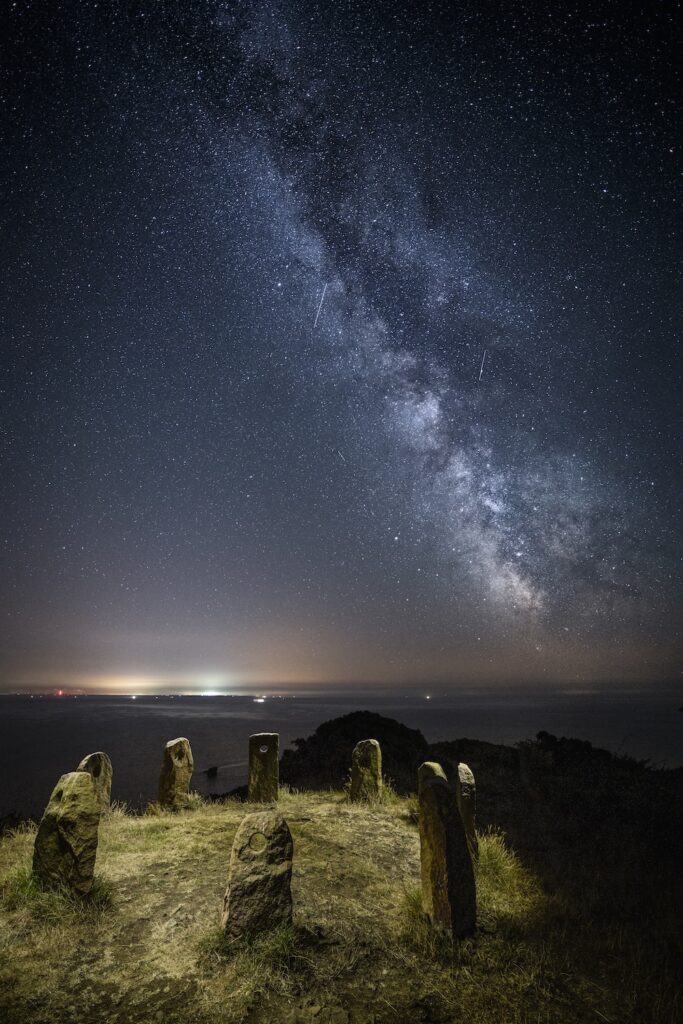
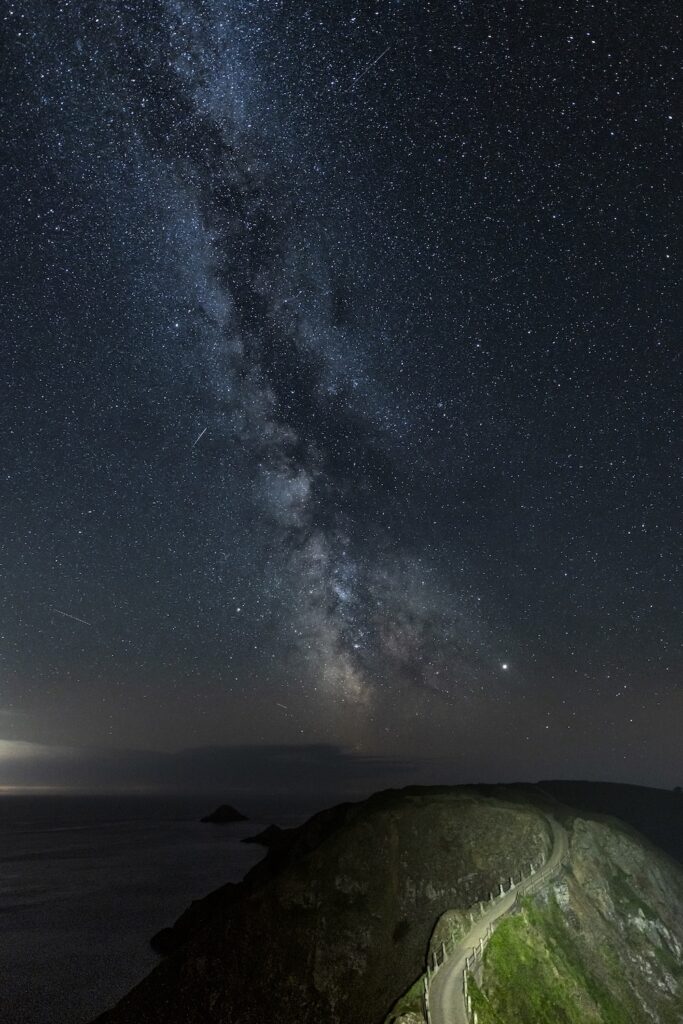
I walk back to my B&B as lively bats whip overhead. I breathe in the balmy April air, laced with hints of blackthorn blossom, sea salt, and cut grass. A slight rustling in the hedges gives away a tiny creature’s nocturnal wanderings. Beyond blackened fields, the sea’s horizon blurs with the night sky.
A tiny island perhaps, but on Sark, my world feels immense.